
- Menu
- Desks
- Seating
- Tables
- Customer Service
- 1.888.719.4960
We pulled every training table from our catalog and evaluated each on flip-top mechanism reliability, caster quality, nesting depth, surface durability, and how efficiently a set of them stores when not in use. These are real-use assessments — training rooms get rearranged constantly, and a wobbly mechanism or sticky caster will make everyone's day worse. Each pick solves a specific training room problem.
| Pick | Product | Width | Depth | Best For |
|---|---|---|---|---|
| Best Overall | Folding Training Table 24in x 60in by PBD Furniture | 60" | 24" | Standard training rooms, 2-per-table seating |
| Best Value | Folding Training Table 18in x 72in by BOSS Office Chairs | 48" | 24" | Single-seat stations, compact layouts |
| Best Budget | Mobile Training Table 24in x 48in by PBD Furniture | 60" | 24" | Budget-conscious flex rooms, heavy-duty storage |
| Best Premium | Training Table with Modesty Panel 24in x 72in by Woodstock Marketing | 192" | 60" | Large training sessions, boardroom flex |
| Most Popular | Training Table 24in x 60in with Power by OGA | 72" | 24" | Classrooms, mid-size training rooms |
| Runner-Up | Nesting Training Table 24in x 60in by PBD Furniture | 60" | 30" | Deeper worksurface, presentation-style setups |
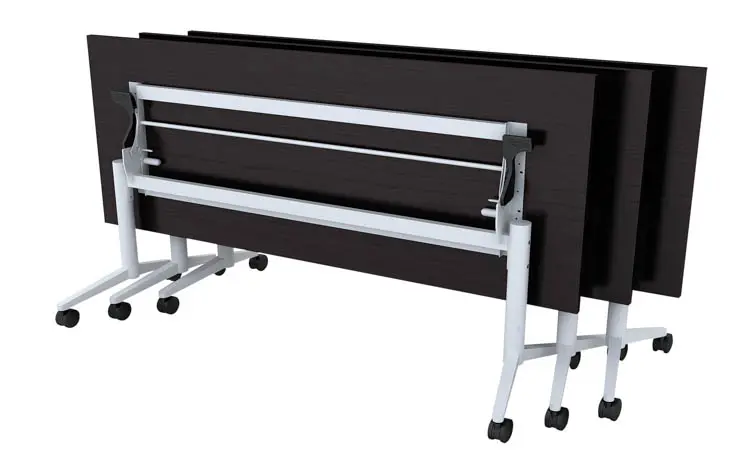
The PBD 60-inch flip top nesting table is the workhorse of the training room world, and it's our Best Overall pick because it threads every needle: it's the right size for two-person seating, it has the 3 mil dura-edge laminate that holds up to daily rolling, folding, and unfolding, and the nesting mechanism actually works the way nesting should work. The casters roll on both carpet and hard floors without fussing. Silver base gives it a clean contemporary look that pairs with most training room chairs. If you're outfitting a training room from scratch, start here.
The 48-inch version of the same PBD A-leg flip top nesting table earns Best Value because it gives you everything the 60-inch does at a lower cost — same laminate spec, same casters, same nesting geometry — in a size that works for single-seat training stations. PBD is refreshingly honest in their product description: this table accommodates one person. That honesty is worth something when you're ordering a dozen units. If your training program runs single-seat, individual workstation layouts, this is the more efficient buy.
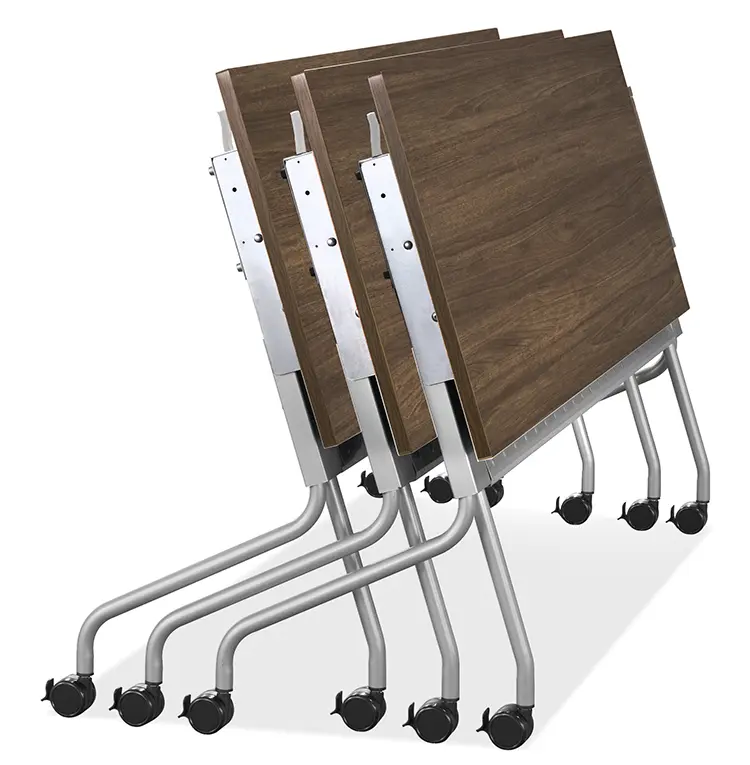
National Public Seating's Flip-n-Store table earns Best Budget by doing something different: the HDPE blow-molded plastic top is nearly indestructible, and at 58 pounds it's genuinely easy for one person to move. Two grommet holes for wire management (uncommon at this price point), a modesty panel with a built-in cable channel, and a 700-lb load rating that no laminate table in this price range approaches. The dual-lever folding mechanism is easier to operate solo than single-lever designs. MAS Certified Green. For a budget training room that needs to handle real abuse, this is the call.
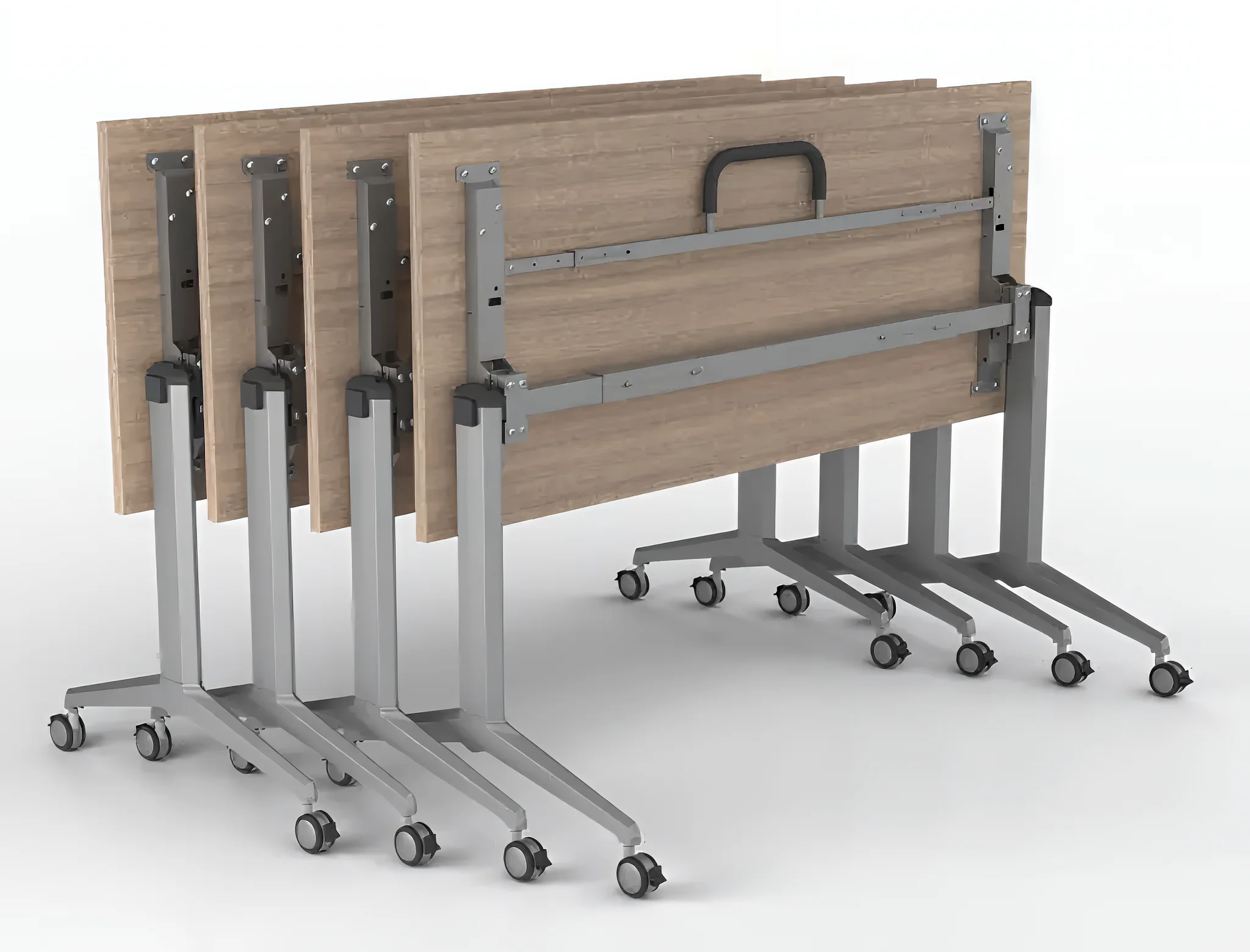
The PBD 16-foot configurable table system is a different kind of product — it's six rectangular table tops and two smaller tops combined with 16 T-leg bases into a 192-inch by 60-inch continuous conference surface. That's a serious training room or boardroom configuration with thermally fused laminate, impact-resistant edges, and multiple available finishes. The system gives you a conference table for large group sessions that breaks down into individual pieces for classroom or workshop layouts. At 60 inches deep, there's real working space on both sides of the table. Black T-bases are the clean choice.
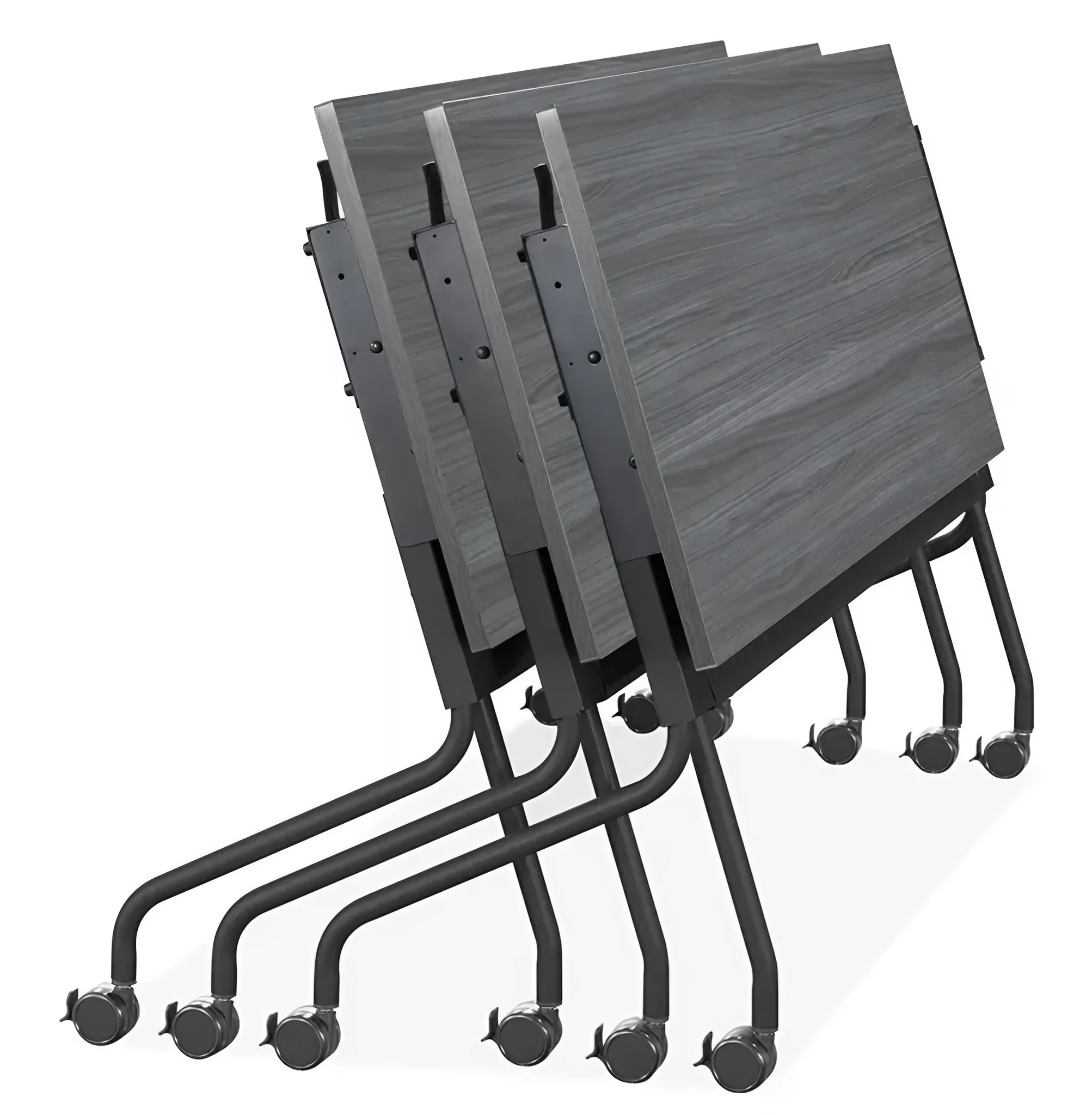
The 6-foot (72-inch) version of the PBD A-leg flip top nesting table is our Most Popular pick because it's the most versatile size: two people with room to spread out, or three in a pinch for a classroom arrangement. Same 3 mil dura-edge laminate, same nesting base, same rolling caster setup as the 60-inch — just six inches wider, which matters more than you'd think in a room where everyone needs a laptop, notebook, and maybe a water bottle in front of them. Espresso with black legs is a clean, professional combination.
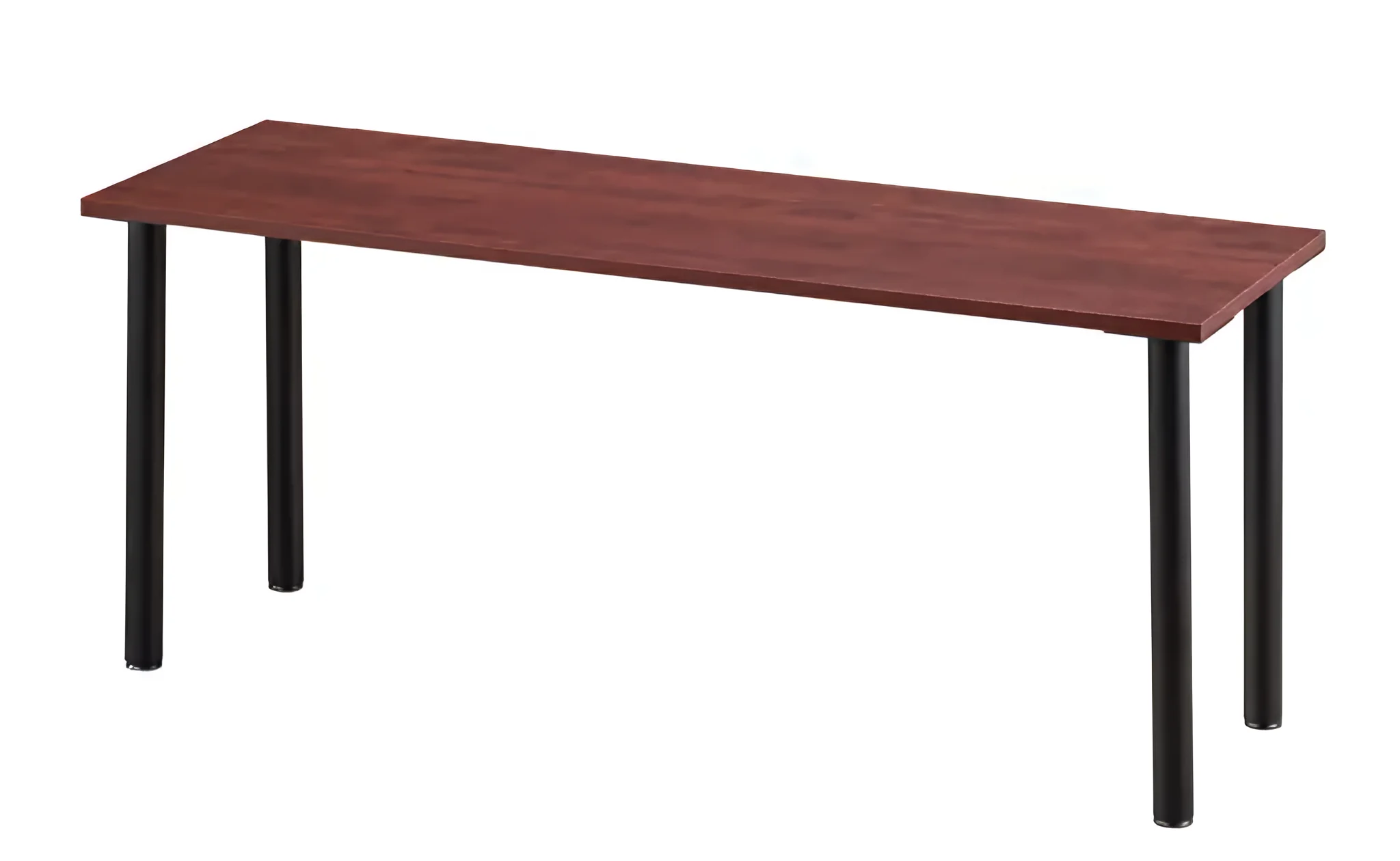
The PBD Y-leg flip top nesting table is the aesthetic upgrade in the lineup. Same quality laminate and caster setup, but the Y-leg base has a three-point stance that reads as more modern in a corporate training environment. At 30 inches deep (versus 24 for the A-leg models), you also get meaningfully more working surface per seat — good for sessions where participants work with large documents or multiple devices. Three base color options (silver, white, black) give more design flexibility than the A-leg line. The Espresso / White Base combination in particular looks sharp in a well-appointed training room.
The flip-top mechanism is the whole point of a training table, and it's the first thing to fail on cheap units. Look for positive locking positions — both fully open and fully folded — and a base that doesn't rattle when tables are deployed. PBD uses a steel A-leg base with a clean pivot point that locks firmly in both positions. The National Public Seating model uses dual levers for extra-easy tabletop folding, which is helpful when you're setting up a room solo.
Nesting means the tables actually interlock when folded and rolled together — not just lined up side by side. True nesting cuts your storage footprint by 60–70% compared to stacking folding tables flat. All of the PBD flip-top picks in this guide genuinely nest. If the description says 'flip top' but doesn't mention nesting, check that the bases offset properly when folded.
Casters make or break a training table. You need casters that roll smoothly on carpet and hard floors without catching, that lock reliably when deployed, and that don't mark up floor finishes. Look for 2-inch or larger casters with at least two locking wheels. The National Public Seating model uses 2-inch casters with two locking wheels — adequate for most training rooms. For large rooms where you'll be moving six-plus tables at once, the bigger 3-mil laminate PBD models with silver bases roll noticeably easier.
Training rooms are hard on surfaces — laptops, pens, notebooks, coffee cups, and the occasional dragged equipment case. Contemporary laminates with 3-mil dura-edge banding hold up to this abuse where cheaper surfaces chip and peel at the edges within a year. Thermally fused laminate is the upgrade worth considering for rooms that get daily heavy use. The HDPE blow-molded top on the National Public Seating model is a different animal entirely — it's nearly indestructible for the price.
If you're filling a room with multiple tables, consistent color matters more than you'd think. All the PBD flip-top models are available in the same contemporary laminate finishes, so Modern Walnut on a 60-inch table matches Modern Walnut on a 48-inch table. The National Public Seating model ships in speckled grey with a grey frame — functional and neutral but not trying to be stylish.
A 60-inch table seats two people comfortably at 30 inches per person. A 48-inch table is really a single-seat station despite having room for two in a pinch — PBD actually flags this in their product notes, which we appreciate for honesty. A 72-inch (6-foot) table seats two with a little extra elbow room, or three if space is tight. For classroom-style setups where everyone faces the front, single-seat-per-table arrangements feel more professional and prevent the neighbor distraction factor.
Fold the tops, nest the bases together in groups of four to six, and roll the nested cluster into a storage closet or against a wall. True nesting tables take about 12–14 inches of linear wall space per four-table cluster, versus 24+ inches if they just stack flat. Make sure your storage space allows rolling access — nested clusters are surprisingly easy to move as a unit once they're locked together.
Yes, and that's the whole value proposition for flex-use rooms. Set four 60-inch nesting tables end-to-end and you've got a 20-foot conference surface that breaks down and stores in 10 minutes. For permanent conference rooms with scheduled meetings, dedicated conference tables look more polished. For rooms that need to switch between presentations, workshops, and meetings daily, nesting training tables are the smarter choice.
Hard floors (tile, hardwood, polished concrete) are easy — any caster works. Low-pile commercial carpet requires casters that don't catch on the fibers; all the models here handle standard commercial carpet fine. High-pile carpet or raised flooring with gaps can be problematic for smaller casters. If your training room has a textured or irregular floor, confirm caster diameter before ordering. Two-inch casters clear most commercial flooring challenges without issue.
For a standard 10-table training room, one person can go from stacked-and-nested to fully deployed in about 8 minutes once you know the drill. The flip-top mechanism on PBD models takes about 10 seconds per table: unlock, flip, roll into position, lock. Adding chair placement doubles your setup time. If the room gets rearranged multiple times a day, two people can turn it around in 5 minutes — it's genuinely fast once the muscle memory is there.
A-leg bases have a classic two-post design — simple, stable, and the most common in training rooms. They nest efficiently and have minimal moving parts. Y-leg bases have a three-point stance that's slightly more stable on uneven floors and often looks a bit more modern. The tradeoff is that Y-leg tables don't always nest as tightly as A-leg versions. For pure storage efficiency, go A-leg. For a nicer aesthetic in a visible corporate training space, Y-leg is worth the consideration.