
- Menu
- Desks
- Seating
- Tables
- Customer Service
- 1.888.719.4960
Both give you height adjustability — but one makes it easy enough to actually use every day and the other makes you work for it. Here's the full picture before you decide.
Quick Verdict
If you genuinely want to build a sit-stand habit and get the ergonomic benefits you bought the desk for, go electric. The button-press convenience is what makes the habit stick. The manual crank is a capable, budget-friendly option for occasional adjustments or spaces without convenient power — but if the goal is real daily use, the electric desk is worth every dollar of the difference.
| Feature / Factor | Electric Standing Desk | Manual Crank Desk |
|---|---|---|
| Typical Width | Common widths from 48"–72" with electric controls | Usually 48"–60" wide with mechanical hand-crank lift |
| Approx. Weight | Approx. 90–180 lbs | Approx. 80–150 lbs |
| Best For | Users who want frequent, low-friction height changes during the day | Budget-sensitive users who want adjustability without motors |
| Main Advantage | Makes posture changes fast enough to become a real daily habit | No power required; simpler mechanics and lower entry cost |
| Main Trade-Off | Costs more and requires powered placement | Height changes take real effort, so users adjust less frequently |
| Adjustment Speed | ~1.5–2 inches per second with button held | ~3–4 rotations per inch of height change |
| Memory Presets | Most models include 2–4 height memory presets | No presets; manually crank to desired height each time |
| Outlet Requirement | Yes — needs nearby power for the control panel | No — fully mechanical, place anywhere in the room |
| Accessory Fit | Works well with presets, cable trays, and monitor arms | Best for lighter-duty personal setups |
| Long-Term Value | Very strong for all-day daily use | Good for selective use; weaker for frequent sit-stand habits |
The functional difference between an electric and a manual crank standing desk isn't about build quality or surface size — it's about friction. A manual crank desk requires you to stop what you're doing, reach for the handle, and physically crank through several dozen rotations to move the surface 15 inches up or down. For most people, that's just enough hassle that they stop doing it. After a few weeks, the desk stays at one height. After a few months, it's just an expensive regular desk.
An electric standing desk removes that friction completely. Press and hold a button, let go when you're at height. With memory presets, you're not even choosing a height — you press your sitting preset or your standing preset and the desk goes there automatically. That's the kind of experience that actually becomes a daily habit. And the daily habit is the whole point of buying a height-adjustable desk in the first place. If you're investing in sit-stand furniture, give yourself the best shot at actually using it.
The electric standing desk is the right call for anyone who wants to build a genuine sit-stand routine. Whether you're in a home office putting in long focused hours or in a commercial space where the desk will be used by one person all day, the push-button experience keeps the habit going. It's also the better pick if you're using accessories like monitor arms, cable management trays, or a keyboard tray, since the desk moves cleanly through its full range with everything attached. For most buyers, the electric desk is simply the version that delivers on the promise of a height-adjustable workstation.
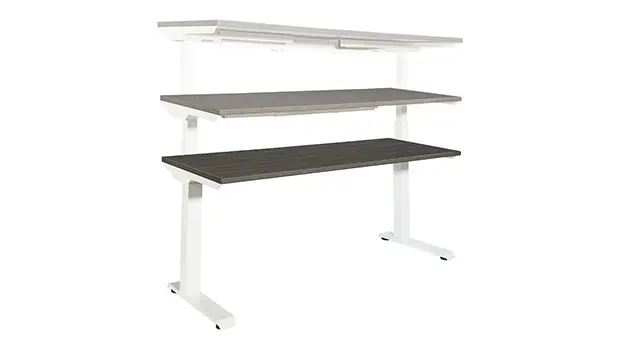
Electric Height Adjustable Standing Desk 60in W x 30in D by Office Star
View & OrderThe manual crank has a genuine use case. If your office doesn't have an outlet in the right spot, if you're setting up a secondary or shared workspace that only needs occasional height changes, or if the budget truly won't stretch to electric, a manual crank desk gives you real adjustability without the motor. It's a mechanical system with fewer components that can fail, and it doesn't require any cord management as the desk moves. For users who adjust height once or twice a day rather than multiple times, the crank is an honest, durable option. Just be clear with yourself about how often you'll actually reach for that handle before you commit.
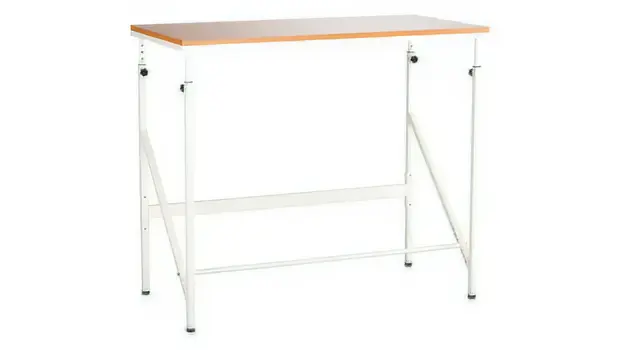
Height Adjustable Desk 60in W x 30in D by Safco Products
View & OrderElectric standing desks run higher than manual crank models — that's straightforward. But think about the return on that investment. A height-adjustable desk that doesn't get adjusted isn't really delivering the ergonomic and health benefits you bought it for. If the friction of the crank means you end up leaving the desk at one height, you've spent money on adjustability you never used. The electric desk costs more upfront but earns that back in the daily habit it makes possible. Factor that into your decision alongside the line-item difference. Free shipping at FindOfficeFurniture.com means no added charges at checkout no matter which you choose.
Both types require basic assembly — frame, top, and fasteners. Electric desks add a control panel and cable routing step. The cable management piece is worth planning before setup day: as the desk travels up and down, the power cord needs enough slack to move with it without creating a tripping hazard or a cord that gets pinched. Most electric desks include a cable management tray or hooks to help organize this, and taking 15 extra minutes to route cables cleanly on day one pays off for the lifetime of the desk. Manual crank desks skip all of that — the only thing moving is the frame and top.
For anyone serious about sit-stand ergonomics and daily posture habits, the electric standing desk is the clear choice. The lower friction of button-press adjustment is what makes the habit real and lasting. The manual crank desk earns its place in specific situations — budget constraints, outlet limitations, or low-frequency adjustment needs. Both are available at FindOfficeFurniture.com with free shipping and a lifetime warranty. Shop online or call us and we'll help you choose the right desk for how you actually work.
Shop Standing Desks at FindOfficeFurniture.comBecause convenience determines how often you actually use the feature. People who find height adjustment easy — pressing a button rather than cranking a handle — change positions far more frequently. A manual crank requires stopping and physically cranking through the full height range, which most users find inconvenient enough that they stop after a few weeks. An electric desk keeps the habit going. If you're buying a standing desk to actually stand at it, the adjustment mechanism is the most important spec on the page.
Electric desks raise or lower at about 1.5 to 2 inches per second — a 15-inch transition takes roughly 7 to 10 seconds. A manual crank requires approximately 3 to 4 full rotations per inch, meaning that same transition takes 45 or more cranks by hand. Most people quickly decide the crank isn't worth doing multiple times a day.
No — that's a genuine advantage. The mechanism is entirely mechanical, so you can place it anywhere without worrying about cord management or outlet proximity. Electric desks need a power source and thoughtful cable routing as the surface moves up and down. In spaces with limited or inconveniently placed outlets, manual crank offers real placement flexibility.
Assembly is similar for both types, with electric desks adding a control panel connection and cable routing step — about 15 to 20 extra minutes. For maintenance, quality commercial electric desks are built for daily use and typically last many years without issues. Manual crank desks have fewer components, which gives them an edge in mechanical simplicity. Neither type requires routine maintenance beyond normal furniture care.
Yes, in specific situations — no convenient outlet nearby, a firm budget, or a secondary workspace with only occasional use. It provides real height adjustability without motors or electronics. Just be honest about how often you'll actually use the adjustment. For active daily sit-stand habits, the electric desk is the version that makes the habit sustainable.