
- Menu
- Desks
- Seating
- Tables
- Customer Service
- 1.888.719.4960
Both will seat you comfortably for an hour. The difference shows up after five. Here's a straight-talking comparison so you choose the chair that actually works for how you use it.
Quick Verdict
For anyone logging serious hours at a desk, the ergonomic chair is the better investment — adjustability is what keeps your back happy and your productivity up over long days. The executive chair is the right buy when the setting demands a certain level of visual authority and presence, and when all-day adjustment isn't the top priority. The best offices often have both, and knowing which job each chair does makes the decision easy.
| Feature / Factor | Ergonomic Chair | Executive Chair |
|---|---|---|
| Typical Seat Width | Usually 19"–21" with multiple adjustment points | Often 21"–24" — wider backs and more padded profiles |
| Approx. Weight | Approx. 35–65 lbs | Approx. 45–80 lbs |
| Best For | Long hours of seated work requiring adjustable support over decorative bulk | Leadership offices and settings where polished presence is part of the brief |
| Main Advantage | Prioritizes posture, movement, and person-to-chair fit | Creates a substantial, commanding look and feels immediately comfortable |
| Main Trade-Off | More technical aesthetic — less traditionally executive in appearance | May sacrifice fine-tuned ergonomic adjustment for scale and padding |
| Lumbar Support | Usually adjustable in position and depth | Varies — best models include real lumbar adjustment, not just padding |
| Seat Depth Adjustment | Common in commercial-grade ergonomic chairs | Less common; often fixed |
| Breathability | Better, especially with mesh back options | Lower, especially in full leather or bonded leather versions |
| Visual Profile | Functional and contemporary | Formal and commanding |
| Long-Term Value | Excellent — support quality influences daily productivity | Strong when image is part of the seating brief |
An ergonomic chair is engineered around the idea that no two bodies sit the same way, and that giving people the ability to tune the chair to their specific dimensions and sitting habits produces better outcomes — less fatigue, less discomfort, more hours of productive, comfortable work. That means adjustable lumbar support that moves up and down to meet your lumbar curve, adjustable seat depth so your thighs are supported without cutting off circulation at the knee, adjustable armrests that let your arms rest naturally, and tilt mechanisms that let the chair move with you rather than fighting you.
An executive chair starts from a different premise: this chair needs to look substantial, authoritative, and impressive. The tall back, the generous cushioning, the upholstered profile — these are signals of status and success that matter in certain office environments. The best executive chairs include real ergonomic adjustability, but the category's defining characteristic is presence, not fine-tuned fit. In an executive suite, a client-facing office, or a boardroom, that presence is genuinely valuable. In a task-focused workstation environment, it's secondary to the support that keeps you productive.
The ergonomic chair is the right pick for anyone who spends serious time at a desk — more than 4 hours in a sitting session, multiple sessions per day, or any kind of work that keeps you rooted in one position for extended periods. That includes knowledge workers, designers, coders, writers, analysts, and really anyone whose day centers on focused seated work. Good ergonomic chairs also adapt well to shared workstations where multiple people of different heights and builds use the same seat — the adjustability range handles that variation where a fixed-fit executive chair often can't. If you're buying one chair and want it to support you for the next 5 to 10 years of real daily use, an ergonomic chair from a quality commercial brand is the investment that pays off every single day.
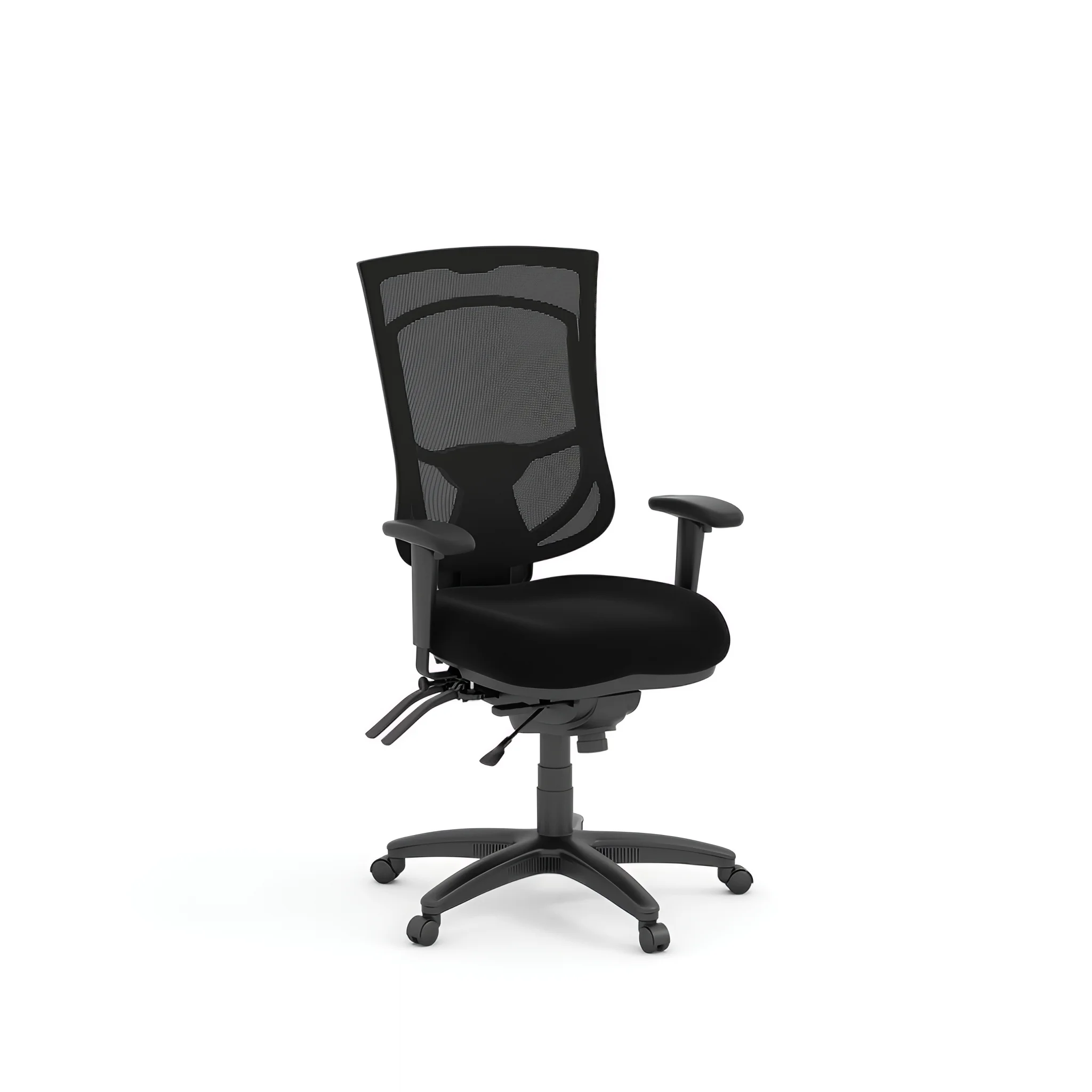
Ergonomic Task Chair Mesh Back Seat by PBD Furniture
View & OrderThe executive chair belongs in offices where the visual environment is doing real work. If you're meeting clients, conducting interviews, or leading an organization from a space where the furniture communicates credibility and authority, the executive chair is a deliberate and worthwhile design choice. It also makes sense when the person using it doesn't spend marathon hours in the same position — if the chair sees 3 to 4 hours of daily use rather than 7 to 8, the ergonomic premium matters less and the look of the chair carries more relative weight. When you shop executive chairs at FindOfficeFurniture.com, look for models that still include genuine adjustability — height, tilt tension, and adjustable arms at minimum. Those features make the chair work both as a presence piece and as a comfortable daily seat.
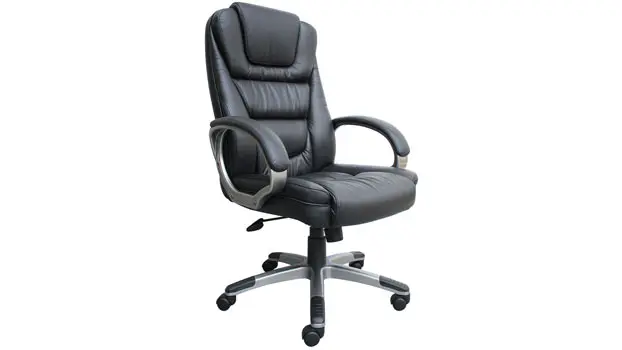
Executive Chair High Back by Boss Office Products
View & OrderBoth ergonomic and executive chairs occupy similar price ranges when you're looking at quality commercial options. The cost conversation is more about value alignment than sticker difference. An ergonomic chair's value shows up every day in the support it provides — that's a daily return on investment that compounds over years. An executive chair's value shows up in what the office communicates to the people who come into it — that's a less quantifiable return but a real one in certain professional contexts. Think about what you need the chair to do and price accordingly. Free shipping at FindOfficeFurniture.com means no freight surprises when your chair arrives, regardless of which direction you go.
Executive chairs run wider and taller than most ergonomic task chairs — plan for a footprint of about 27 to 30 inches wide and make sure you have at least 30 inches of clearance behind the desk for the chair to recline comfortably. Ergonomic chairs typically need slightly less room and work well in tighter private offices, cubicle environments, and benching stations. Both types fit under standard desk heights when seated, but executive chairs with tall backs can visually dominate smaller rooms — if your office is on the compact side, that's worth considering before ordering.
For productive, comfortable all-day desk work, the ergonomic chair is the stronger investment — the adjustability is what makes the chair work for you rather than against you over long sessions. For private offices where the space needs to project authority and the chair is part of the impression, an executive chair with good adjustment features is an excellent choice. Both categories are strong at FindOfficeFurniture.com, with free shipping and a lifetime warranty on every order. Shop seating online or give us a call and we'll help you find the right fit for your office.
Shop Seating at FindOfficeFurniture.comAn ergonomic chair optimizes for adjustability — lumbar position, seat depth, armrest angle, and tilt tension to match your specific body and sitting style. An executive chair optimizes for presence — a tall back, substantial cushioning, and an upholstered profile that communicates authority. The best executive chairs also include ergonomic adjustments, but they lead with the look. Choose based on whether your primary need is all-day support or professional impression.
You can if the chair includes real lumbar support and seat adjustability. The risk with some executive chairs is that thick cushioning gives the impression of support without the adjustable positioning needed for hours of proper alignment. When shopping for an executive chair for all-day use, confirm it includes adjustable lumbar depth, seat height, seat depth, and reclining tension — not just padding.
Yes, especially high-back ergonomic chairs in quality upholstery. Modern ergonomic chairs in leather or quality fabric can look polished and intentional in a private office. What they won't give you is the commanding traditional executive look. If that classic aesthetic is important, an executive chair is the right choice. High-quality ergonomic chairs can deliver both professional appearance and genuine all-day support.
Ergonomic chairs generally handle a wider range of body types more comfortably. The adjustability features — seat height range, seat depth, lumbar position — let shorter users dial the chair to fit precisely. Executive chairs with fixed or limited lumbar adjustment can leave shorter users without proper lower back contact. For shared spaces or varied body types, an ergonomic model with a wide adjustment range is the practical choice.
The value depends on what you need. If image matters and clients or colleagues regularly see the chair, an executive chair does a job ergonomic chairs don't — it makes the space feel authoritative. If the priority is comfortable all-day sitting for demanding desk work, an ergonomic chair delivers better daily return. Many buyers end up wanting both: an ergonomic chair for primary work and an executive chair for when the room needs to make an impression.