
- Menu
- Desks
- Seating
- Tables
- Customer Service
- 1.888.719.4960
One chair is built for all-day performance. The other is built to make a statement. Here's how to figure out which one actually fits your office — before you're stuck with the wrong one.
Quick Verdict
For most offices, the task chair is the smarter daily workhorse — compact, adjustable, and easy to standardize across multiple seats. The executive chair earns its place when visual presence and a more upholstered feel are part of the brief, particularly in private offices and leadership spaces. Know which problem you're actually trying to solve, and the right chair becomes obvious.
| Feature / Factor | Task Chair | Executive Chair |
|---|---|---|
| Typical Width | 18"–21" — compact and maneuverable | 21"–24" — wider with a taller back profile |
| Approx. Weight | 25–45 lbs | 45–80 lbs |
| Best For | General workstation seating — open plans, private offices, hybrid setups | Leadership offices where presence and upholstered comfort matter |
| Main Advantage | Adjustable, purpose-built for active daily use — light footprint | Substantial look with immediate comfort out of the box |
| Main Trade-Off | Less visual presence and executive styling | May trade fine-tuned ergonomic support for scale and padding |
| Ergonomic Controls | Seat height, tilt tension, arms, and lumbar — typically all adjustable | Best models include tilt, adjustable arms, and lumbar depth |
| Assembly | Quick to assemble — easy to roll out across multiple seats | Heavier but still straightforward |
| Space Planning | Dense office layouts and multi-seat rollouts | Needs slightly more clearance — better as an individual office specification |
| Visual Feel | Efficient and understated | Formal and commanding |
| Long-Term Value | Excellent for broad deployments and active daily use | Strong when image is part of the brief — weaker if pure ergonomics lead |
The task chair and the executive chair both do the same basic job — they put a person in a seat at a desk — but they approach it from completely different directions. A task chair is engineered for the person who is actively working. Seat height adjusts, the tilt tension responds to your body weight, armrests move in and out, and lumbar support can usually be tuned to your lower back. You sit in it for eight hours and the chair adapts. That's the whole design intent.
An executive chair comes from a different tradition. It's bigger, heavier, and usually wrapped in bonded leather or thick upholstery. The message it sends when you walk into the room is deliberate — authority, permanence, investment. That matters in certain offices. But if you're in that chair all day every day, the comfort equation isn't always better. Plush doesn't always mean supportive, and a chair that feels great for thirty minutes in a showroom can feel very different after three hours of actual work.
The task chair is the right call when you're actually sitting at that desk for most of the workday. It's also the obvious choice for open-plan offices, training rooms, or any situation where multiple people might use the same seat. The adjustability range means one good task chair can accommodate a wider range of body types and sitting preferences than an executive chair ever could. High-back task chairs with mesh backs and full lumbar systems are genuinely comfortable for long sessions — and they look clean and professional in any setting.
If you're furnishing multiple workstations at once, the task chair also wins on logistics. Lighter weight, faster assembly, and a more consistent spec across the floor make the purchasing and installation process much smoother.
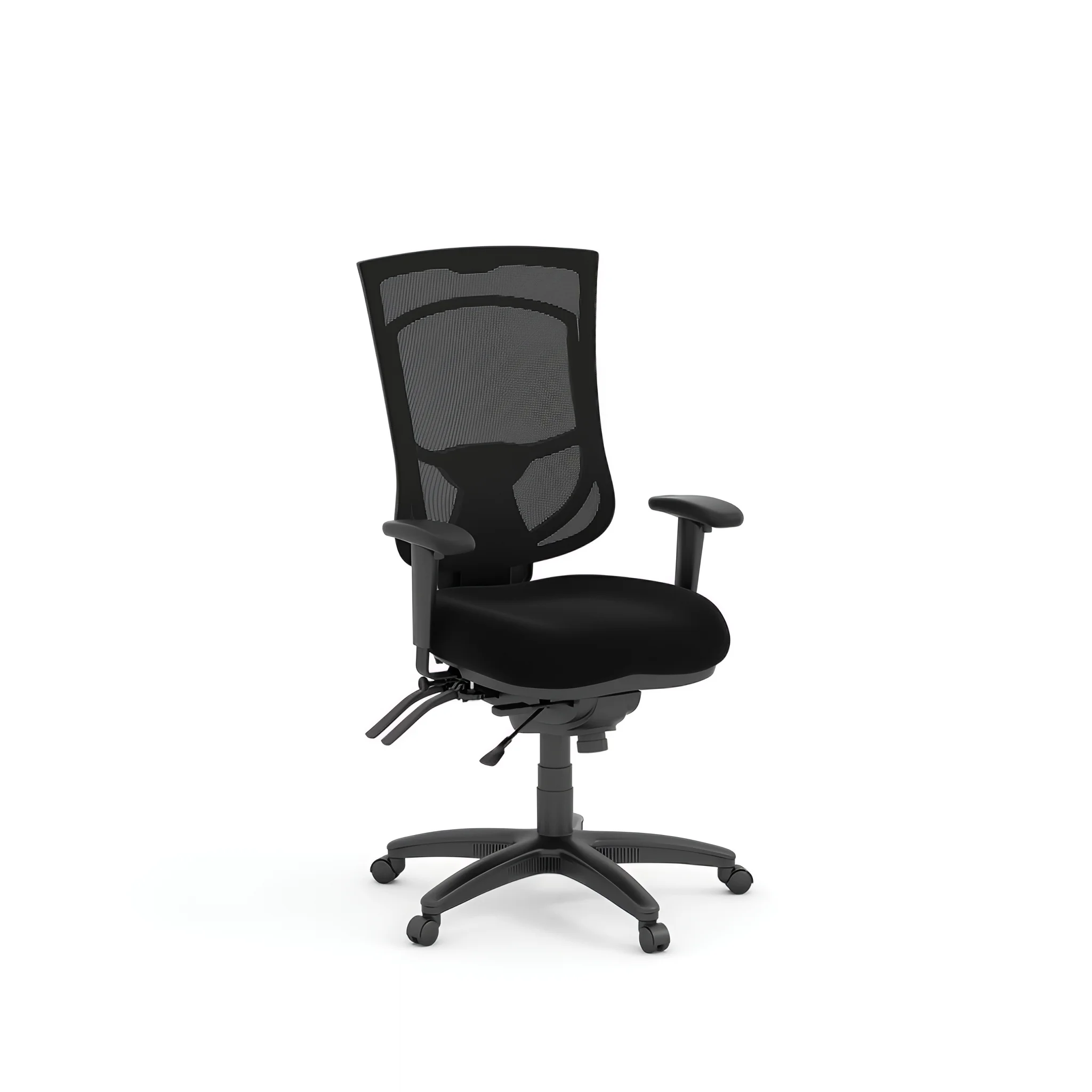
Ergonomic Task Chair Mesh Back Seat by PBD Furniture
View & OrderThe executive chair makes sense when the office itself is part of the message. A corner office, a partner's suite, a C-level workspace — these settings often call for a chair that looks like it belongs to someone in charge. If the person in that seat is moving in and out of the chair frequently (lots of meetings, standing at a whiteboard, walking the floor), they may not need the high-end ergonomic adjustability of a task chair. They need something that looks and feels the part when they're at the desk, and the executive chair delivers that.
Just do your homework on the ergonomic specs before buying. A good executive chair still needs adjustable seat height, a working tilt lock, and some form of lumbar support. A chair that checks those boxes and looks great is a worthwhile investment. One that skips them in favor of thick leather and chrome trim will wear out its welcome faster than you'd expect.
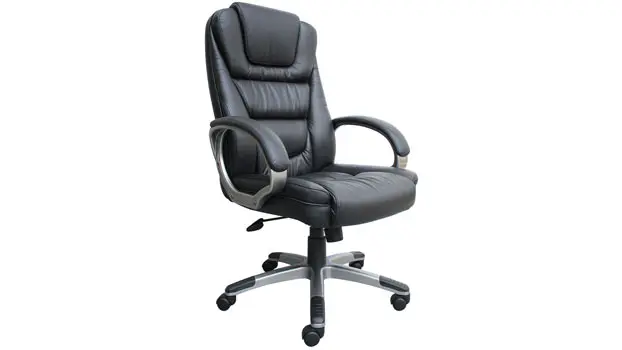
Executive Chair High Back by Boss Office Products
View & OrderNeither chair type automatically wins on value — it depends entirely on how well the chair matches the application. A well-chosen task chair in a busy private office will outlast and outperform a beautiful executive chair that wasn't designed for all-day ergonomic use. Conversely, dropping a basic task chair into a senior leader's office when a polished executive model would serve better is a missed opportunity.
Think about the full picture: who's sitting in it, how many hours a day, what the room needs to communicate, and how many seats you're specifying. That context makes the right choice obvious. Free shipping at FindOfficeFurniture.com means the listed price is the full price — no freight surprises at checkout.
Don't overlook clearance. An executive chair needs at least 30 to 36 inches behind the desk to push back and stand up without bumping into a credenza or wall. Task chairs are more forgiving — their smaller footprint and lighter weight make them easier to reposition, and they won't dominate a smaller room the way a large executive model can.
If you're specifying seating for a multi-person office, sketch out the workstation footprints first and confirm that the chair you're considering leaves comfortable movement paths between desks. We've helped a lot of buyers work through this before ordering — give us a call and we're happy to talk through the layout with you.
For the majority of offices and daily desk workers, the task chair delivers more practical value — better adjustability, easier deployment, and a smaller footprint without sacrificing comfort. The executive chair belongs in spaces where presence and atmosphere are part of the specification, not just the seat. Browse office seating at FindOfficeFurniture.com or give us a call and we'll help you match the right chair to the right office.
Shop Seating at FindOfficeFurniture.comA task chair is built around adjustability and all-day support in a compact footprint — seat height, tilt tension, armrests, and lumbar are all tunable so the chair fits your posture rather than asking your posture to fit the chair. An executive chair prioritizes visual weight, plush upholstery, and a commanding presence in the room. Both can be comfortable, but they solve different problems. If you spend six or more hours a day at a desk, the task chair's adjustability usually wins out over the executive chair's cushion depth.
Absolutely. High-end task chairs — especially high-back models with full lumbar and adjustable headrests — look polished and professional in any private office. The days of task chairs looking purely utilitarian are long gone. If the occupant is working intensively from the chair most of the day, a well-specified task chair is often the smarter buy even for a corner office. Choose a model with a clean design and quality materials rather than defaulting to executive styling just because the office is private.
It depends on the model. Some executive chairs include solid lumbar support, adjustable armrests, and a tilt lock — which makes them genuinely comfortable for extended sessions. Others prioritize appearance over adjustability and can cause back fatigue over time. Before buying an executive chair for daily use, confirm it has at minimum: adjustable seat height, a functional tilt mechanism, and some form of lumbar support. Without those features, it looks the part but won't hold up for a full workday.
Executive chairs run wider — typically 21 to 24 inches across — and often have taller backs. You'll want at least 30 to 36 inches of clearance behind the desk to push the chair back comfortably. Task chairs are more compact at 18 to 21 inches wide, which makes them a better fit for tighter workstations and open-plan seating. For dense office layouts or multi-seat specifications, the task chair's smaller footprint simplifies planning considerably.
Task chairs are far easier to standardize across a multi-seat office. They're lighter (typically 25–45 lbs), come in a wider range of fabrics and finishes, ship and assemble quickly, and are easier to add as headcount grows. Executive chairs are better treated as individual purchases for specific offices rather than a standard spec rolled out across the floor. If you're furnishing more than a handful of seats at once, a well-chosen task chair will be faster to specify, easier to receive, and simpler to maintain over time.