
- Menu
- Desks
- Seating
- Tables
- Customer Service
- 1.888.719.4960
Both fold up and store away, but they're built for different environments and different priorities. Here's what actually separates them so you can pick the right one the first time.
Quick Verdict
For events, outdoor setups, and utility environments where light weight and moisture resistance matter more than appearance, blow-mold wins. For training rooms, break rooms, and indoor multi-use spaces where the table needs to look like it belongs in the office, laminate is the better choice. Both are portable and practical — the environment they're going into makes the decision.
| Feature / Factor | Blow-Mold Folding Table | Laminate Folding Table |
|---|---|---|
| Typical Sizes | 4′–8′ long, lightweight molded plastic top | 4′–8′ long, thicker top with furniture-like edge treatment |
| Approx. Weight | 18–45 lbs | 35–75 lbs |
| Best For | Events, break areas, temporary setups, and high-mobility utility needs | Training, meeting, and multi-use office areas that still want a finished look |
| Primary Strength | Lighter to move and much better around moisture or rough outdoor handling | Looks more professional indoors and feels sturdier and more substantial in use |
| Primary Trade-Off | More utilitarian look — reads as event equipment rather than office furniture | Heavier and less tolerant of harsh utility treatment or prolonged moisture |
| Moisture Resistance | Excellent — plastic top has no substrate to swell | Good on the surface, more vulnerable at edges and under prolonged exposure |
| Outdoor Use | Strong choice for regular outdoor use | Fine occasionally; not recommended for extended outdoor use |
| Stacking & Storage | Works well on event carts; quick to carry and deploy | Manageable but heavier — fewer tables per cart load |
| Visual Profile | Utility-driven, plastic look | More office-ready and refined |
| Long-Term Value | Excellent for portable, utility-heavy applications | Excellent for indoor commercial spaces where appearance matters |
A blow-mold folding table top is made from high-density polyethylene (HDPE) plastic formed into a hollow, ribbed structure that's lightweight but surprisingly rigid. Because the entire top is one continuous plastic piece, there are no seams, no edge banding, and no particleboard substrate to absorb moisture. You can leave it out in light rain, spill a drink on it, or load it onto a cart with other tables without worrying about the surface delaminating or edges peeling. The weight savings are real too: a standard 6-foot blow-mold table typically weighs 25–35 lbs, versus 45–60 lbs for a comparable laminate top.
Laminate folding tables have a wood-based substrate (usually particleboard or medium-density fiberboard) topped with plastic laminate and finished with edge banding. This construction gives them a more substantial appearance and feel — they look like real furniture, and in a training room or break area, that matters. The tradeoff is weight and moisture sensitivity at the edges. Keep them indoors and treat them reasonably, and they'll last for many years. Take them outside regularly or subject them to rough handling, and the edges will show it.
Go with blow-mold when the application is genuinely utilitarian: catered events, outdoor setups, emergency overflow seating, break room additions, or any context where the table needs to be light, portable, and able to handle rough treatment without complaint. The weight difference is significant when you're moving a full cart of tables — one person can handle a 6-foot blow-mold table solo in a way that's not realistic with a laminate top. For organizations that rent out space for events, run outdoor programming, or need quick-deploy tables for operational rather than presentational purposes, blow-mold is the sensible choice.
Blow-mold also makes sense for high-quantity purchases where budget per unit matters and the tables are clearly going into a utility role. You can put more tables in the same budget and handle more events or setups simultaneously.
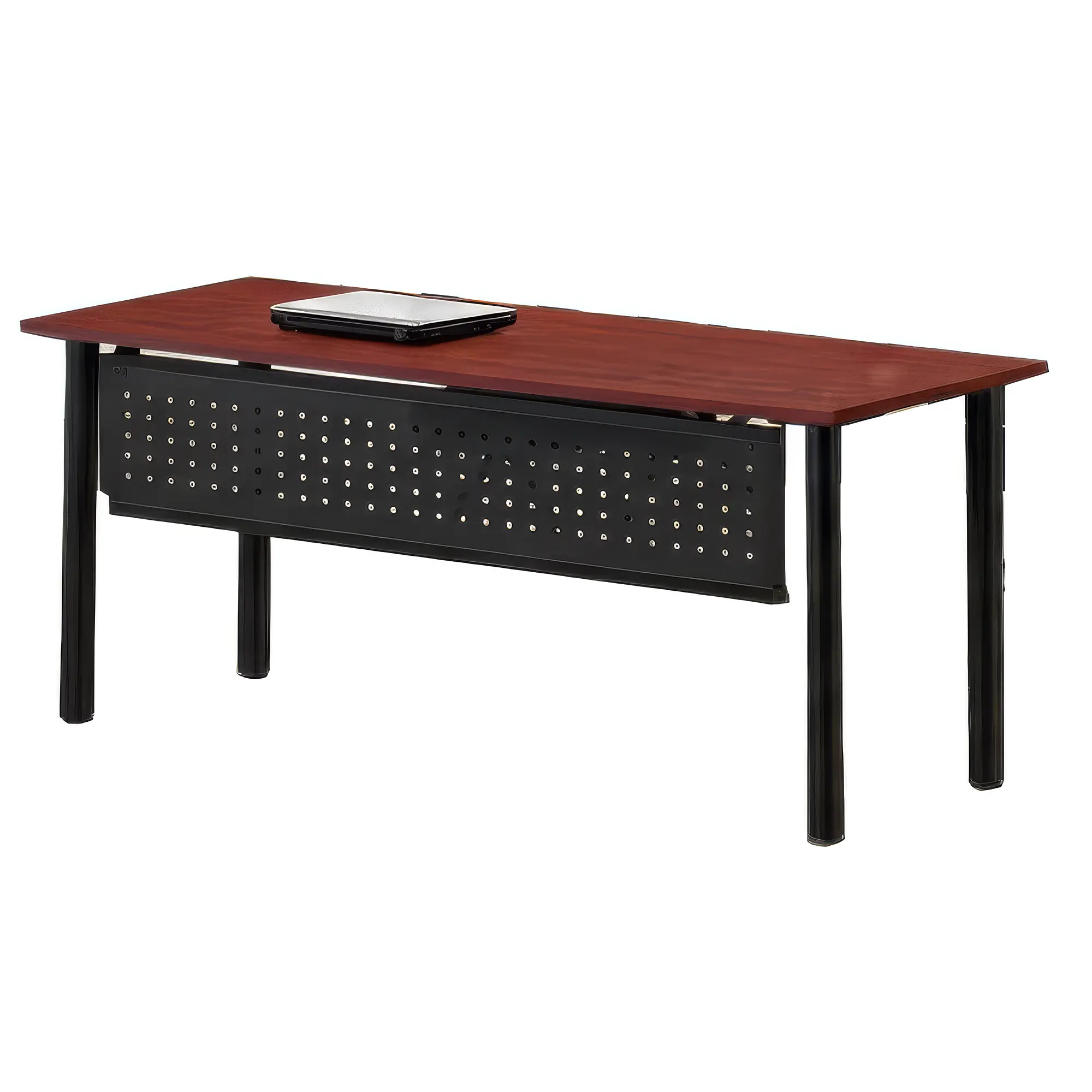
Training Table 60in x 24in with Post Legs by Office Star
View & OrderLaminate is the right pick for any indoor environment where the table has a visible role in the room. Training rooms, seminar spaces, break rooms, employee dining areas, temporary meeting rooms — these are all contexts where a table with an office-quality look improves the experience of the people using the space. The thicker laminate top, the woodgrain finish options, and the cleaner edge profile all make laminate tables feel less like event rentals and more like intentional room furnishings.
Laminate tables also stand up better to everyday surface use than blow-mold — they feel more solid when writing on them, less prone to flexing under concentrated loads, and less likely to produce the hollow plastic sound that blow-mold tops make when someone sets something down firmly. In environments where table quality is part of the overall room impression, laminate delivers more for the premium.

Folding Banquet Table 60in x 30in by Regency
View & OrderMany organizations buy both. Laminate tables are assigned to visible spaces — training rooms, seminar areas, overflow meeting rooms — while blow-mold tables live in the loading dock area or a back closet for events and overflow situations. This split approach lets each type do the job it does best without compromise. If you're specifying a table fleet for a campus or a multi-use facility, it's worth thinking about this segmentation from the start. The total cost is often lower than buying all of one type for all scenarios.
Match the table to the environment it's going into. Blow-mold for utility, events, and outdoor use. Laminate for training rooms, office spaces, and anywhere appearance is part of the brief. Both are solid choices from quality manufacturers and both will give you years of service if they're used the way they're designed to be used. Call us with your specific scenario and we'll help you find the right table, right quantity, and right finish. Free shipping means the price you see is the price you pay.
Shop Tables at FindOfficeFurniture.comA blow-mold folding table top is made from high-density polyethylene (HDPE) plastic formed using a blow-molding process that creates a hollow top with structural ribs inside for stiffness. The top is a single molded piece with no seams, no edge banding, and no exposed particleboard. This makes blow-mold tops resistant to moisture, easy to wipe clean, and very lightweight compared to laminate tops of the same size. The legs and frame are typically steel, same as laminate folding tables.
Short-term moisture exposure — spilled drinks, brief outdoor use — is usually fine because the top surface itself is plastic laminate. The vulnerable area is the edge banding and any exposed substrate at corners. Repeated moisture at those points can cause the substrate to swell and the banding to lift over time. Blow-mold tops don't have this issue. For applications with regular liquid exposure, blow-mold is the more forgiving choice.
Laminate folding tables look more like office furniture and less like event equipment. The thicker top profile, wood-tone finish options, and edge treatment give them a more substantial, furniture-like appearance. Blow-mold tables have a recognizable plastic look that reads as utility equipment. For training rooms, seminar spaces, or any office environment where appearance contributes to the room's quality, laminate is the better choice.
Blow-mold tables are significantly better for outdoor use. The plastic top doesn't absorb moisture, resists UV degradation better than laminate edge banding, and handles temperature swings without cracking or peeling. Laminate tables can be used outdoors occasionally but should not be left exposed for extended periods. For regular outdoor use — catered events, outdoor sessions, employee events — blow-mold is the practical choice.
In appropriate environments, both last many years. Blow-mold holds up better in rough-handling scenarios: stacking, cart loading, outdoor use, and liquid exposure. Laminate holds its appearance longer in professional indoor settings. The biggest wear point on laminate tables is the edge banding — once it starts to peel, the table looks worn quickly. Blow-mold surfaces don't have this issue. Match the table to the environment and both will give you good service.