
- Menu
- Desks
- Seating
- Tables
- Customer Service
- 1.888.719.4960
Both solve the same problem — you need storage above the worksurface without giving up floor space. But they're built for different environments, different desk types, and different visual expectations. Here's how to choose the right one without ordering something that doesn't fit.
Quick Verdict
A desk hutch belongs in a private office built around a casegoods furniture suite — it adds serious storage capacity and completes the look of the workstation. An overhead bin belongs in a panel system, benching installation, or any modular environment where lightweight, accessible above-surface storage is needed without the full presence of a hutch. Match the product to the environment it was designed for and both are excellent choices.
| Feature / Factor | Desk Hutch | Overhead Bin |
|---|---|---|
| Typical Width | 36"–72" wide; sized to match the desk or credenza it sits on | 30"–48" wide; narrower modular units for panel or benching systems |
| Approx. Weight | 60–180 lbs depending on width and construction | 25–90 lbs; lighter construction to mount above surfaces |
| Best For | Private offices with casegoods desks that need integrated above-surface storage | Panel systems, benching, and modular workstations needing lightweight overhead access |
| Main Advantage | Adds substantial vertical storage while keeping the furniture visually coordinated | Adds storage in open-plan and systems environments without the full weight of a hutch |
| Main Trade-Off | Creates a more built-in appearance that's harder to move or repurpose after installation | Less enclosed volume; more of a tray/shelf format than a full enclosed storage unit |
| Mounting / Support | Rests on the desk or credenza top; usually compatible with matching desk models only | Mounts to panel system supports; compatibility is system-specific |
| Storage Format | Shelves, enclosed compartments, often with doors, tackboard, or lighting options | Open or hinged-door shelf format; primarily horizontal access |
| Installation | Best ordered with the desk; plan alignment before delivery | Requires compatible panel hardware; confirm system compatibility first |
| Visual Profile | Furniture-grade; substantial and intentional in the room | Modular and workstation-oriented; lighter visual presence |
| Long-Term Value | High for stable private-office setups with casegoods | Strong in systems furniture environments with planned future flexibility |
Desk hutches and overhead bins are both above-surface storage, but they come from completely different product categories with different design logic. A desk hutch is a furniture piece — it's designed with the same materials, finish, and proportions as the casegoods desk it sits on. The combined look of a desk-plus-hutch creates a unified, professional workstation that looks finished and deliberate. Hutches typically include multiple shelves, some form of enclosed compartments or doors, and often optional tackboards or task lighting. They add real volume: a full-width hutch on a 72-inch credenza can hold binders, books, office supplies, and personal items all at once.
Overhead bins come from the systems furniture world. They're designed to mount on panel uprights above benching runs or cubicle workstations, and they're sized and built for that application — lighter construction, narrower profiles, and open or hinged-door formats that provide quick access from a seated position. They're not meant to carry the storage load of a full hutch; they're meant to give each workstation user a designated above-surface space for daily-use items without adding physical weight to the panel structure.
If you're furnishing a dedicated private office around a casegoods desk or credenza, the hutch is the right above-surface storage choice. It's the most efficient way to use vertical space in a private office — the hutch rises above the desk without consuming any additional floor area and adds meaningful organized storage that a stack of freestanding accessories can't replicate. Plan the hutch at the same time as the desk, order from the same product family, and the combination looks built-in from day one. This is especially worth it for users who deal with a lot of paperwork, reference materials, or supplies that need to stay close at hand without cluttering the worksurface.
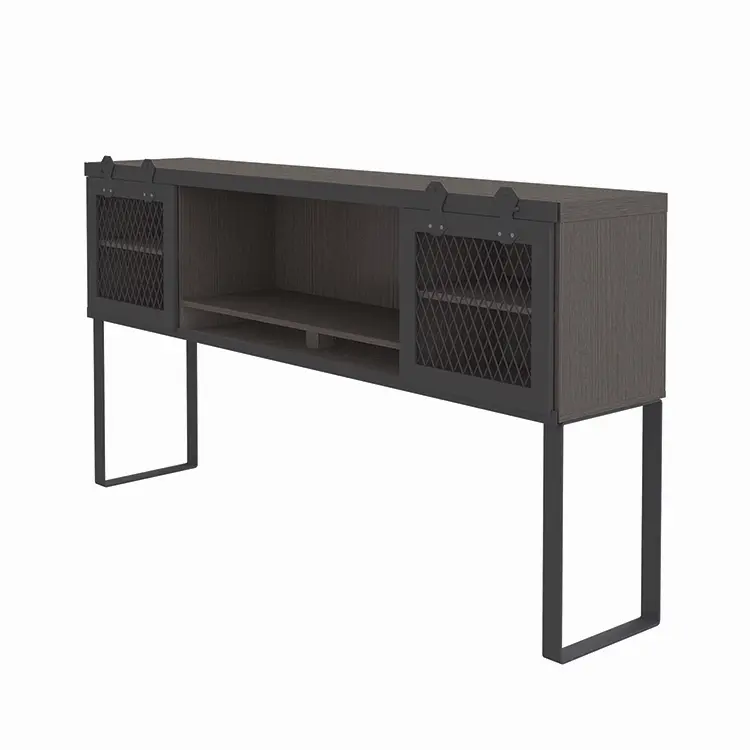
Desk Hutch 66in W x 14in D x 37in H by Coaster Fine Furniture
View & OrderOverhead bins are the right choice when you're working with a panel system, a benching installation, or any open-plan workstation environment. They deliver accessible above-surface storage without requiring casegoods furniture or a dedicated private-office setup. In benching environments especially, overhead bins give each user a consistent, designated storage zone that keeps personal items off the worksurface and out of shared space. They're also easier to reconfigure than hutches if the office layout changes — moving panel-mounted storage is simpler than moving a piece of casegoods furniture that was ordered as part of a matching desk package.
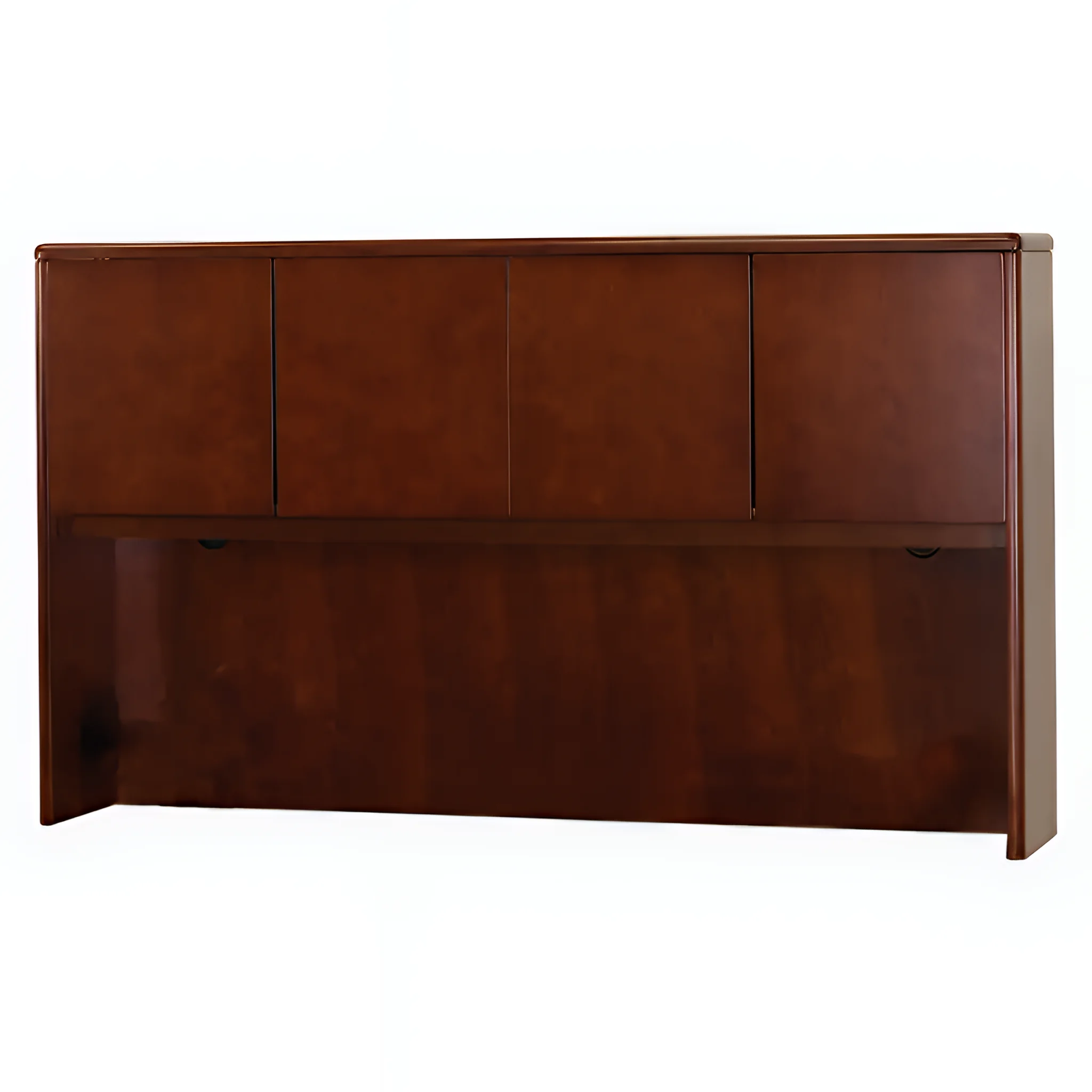
Overhead Storage Bin 48in Wide by Office Star
View & OrderHutch compatibility is straightforward when you order from the same furniture line as the desk: the hutch is designed to sit on that desk, the dimensions align, and the finish matches. Where it gets more complicated is when you're adding a hutch to an existing desk after the fact. Not every hutch will rest securely on every desk — if the desk top doesn't have the matching dowel holes or alignment points, the hutch may just rest on top without actually being secured. For existing desks, call us and we'll help you find a compatible solution rather than guessing.
For overhead bins, compatibility is about panel system matching. Overhead bins mount to panel uprights using hardware specific to the panel manufacturer and system. Before ordering any overhead bin, confirm the panel brand, the system name, and the panel height — those three things determine whether a specific bin will mount properly and at the right working height above the surface.
Private office with a casegoods desk? Get the hutch — it's more storage, better looking, and worth every dollar for a permanent workstation. Panel system or benching? Overhead bins are purpose-built for that environment and will serve you well without the complexity of casegoods furniture. Both are available at FindOfficeFurniture.com with free shipping. If you need help with compatibility, measurements, or specifying the right above-surface storage for a complete workstation, give us a call — we've been doing this for over 30 years and we'll get it right.
Shop Desks at FindOfficeFurniture.comA desk hutch is a substantial storage unit sized to sit directly on a desk or credenza — typically 36 to 72 inches wide — and usually includes shelves, enclosed compartments, and sometimes doors or tackboard panels. It's part of a coordinated furniture package and adds significant vertical storage. An overhead bin is a narrower, lighter storage module for panel systems or benching, mounted above the worksurface on panel supports. Overhead bins add accessible above-surface storage in a modular format without the footprint or visual weight of a full hutch.
Not always. Hutches are designed for desks that share the same product line — they rest on the back edge of the worksurface and often use alignment pins corresponding to holes in the desk top. A hutch from one manufacturer typically won't fit cleanly on a desk from another. If you're starting fresh, ordering the desk and hutch together from the same line is the cleanest approach. For existing desks, call us and we'll help confirm compatibility.
Quite a bit. A full-width hutch on a desk creates a strong vertical presence that fills the wall behind the workstation and makes the setup feel built-in and substantial. In a private office designed around a complete casegoods suite, that's a feature — the hutch ties the room together. In smaller rooms, the visual weight of a hutch can feel imposing. If you want above-surface storage with less visual impact, an overhead bin or a partial hutch covering only part of the desk width is a lighter alternative.
No — overhead bins are system-specific. Mounting hardware is designed for particular panel manufacturers and series. Before ordering an overhead bin, confirm the panel brand, system name, and panel height. Some systems also have maximum height limitations that affect what can be mounted above them. If you're not sure about compatibility, call us before ordering — we'll confirm the fit.
For a dedicated private office you're furnishing as a complete workstation, yes. A hutch adds more storage per dollar than almost any other above-surface option and coordinates visually in a way that improvised solutions can't match. If you're furnishing a shared or flexible space, or if the desk layout may change, the flexibility of an overhead bin or a separate bookcase will typically serve you better over time.