
- Menu
- Desks
- Seating
- Tables
- Customer Service
- 1.888.719.4960
They take up similar floor space and serve a similar purpose, but they produce very different results in daily use. Choosing wrong means either a cluttered-looking office or storage that slows you down when you need something quickly. Here's how to get it right.
Quick Verdict
Open shelving is the better pick when you need frequent, instant access to what's stored and you're confident the contents will stay organized. Closed cabinets are the right call when appearance matters, when items don't need to be visible, or when you want a cleaner, more professional-looking room. In practice, many well-run offices use both — and that's often the best answer.
| Feature / Factor | Open Shelving / Bookcase | Closed Cabinet |
|---|---|---|
| Typical Width | 30"–36" wide, 12"–15" deep in standard office bookcase formats | 30"–36" wide, 18" deep; wider and taller options available |
| Approx. Weight | 60–150 lbs | 90–240 lbs |
| Best For | Reference materials, display items, and frequently accessed office supplies | Offices wanting a clean visual line and better protection from dust or casual visibility |
| Main Advantage | Contents are visible and reachable without opening doors or drawers | Hides supplies and paperwork, keeping the room looking organized and polished |
| Main Trade-Off | Exposes clutter — disorganized contents show immediately | Slightly slower access; visually heavier than open shelving of the same size |
| Accessory Compatibility | Works beautifully with coordinated bins, binder labels, and display items | Can include locks, drawer inserts, and matching casegoods finishes |
| Assembly | Simple — easy to position and reposition as needed | Standard cabinet assembly; heavier and less flexible to move |
| Maintenance | Simple, though contents need regular tidying to stay presentable | Easy and forgiving — hides what's behind the doors |
| Visual Profile | Open, lighter, and more residential or library-like in feel | Solid, contained, and professional-looking |
| Long-Term Value | Strong when visibility is a benefit rather than a liability | Very strong in offices that struggle with visual clutter or client impressions |
Open shelving and closed cabinets start to look very different the moment you're actually using them. With open shelving, everything is right there — you see the binder you need, reach for it, and you're done. There's no door to open, no drawer to pull out, no searching. That speed and immediacy is a genuine advantage for the kinds of materials you use frequently: active project files, reference books, binders you consult daily, or supplies that move in and out of storage throughout the day.
The cost of that convenience is visibility. Open shelving shows everything — which is great when things are organized and looks like a problem when they're not. A closed cabinet tolerates a certain amount of disorder behind its doors. You can have a somewhat imperfect arrangement inside without the room ever betraying it to visitors or during video calls. That's a real practical advantage, especially in shared offices or any space where presentation matters.
Go with open shelving when you have materials you reference constantly and you're comfortable keeping them organized visibly. Private offices, dedicated home offices, and library-style workrooms are natural fits. Open shelving also works well for display purposes — awards, reference volumes, framed items, and organizational materials can all look deliberate and professional on a well-arranged open bookcase. If the room has good natural light and a warm aesthetic, a well-styled open bookcase adds character that a solid cabinet wall can't replicate.
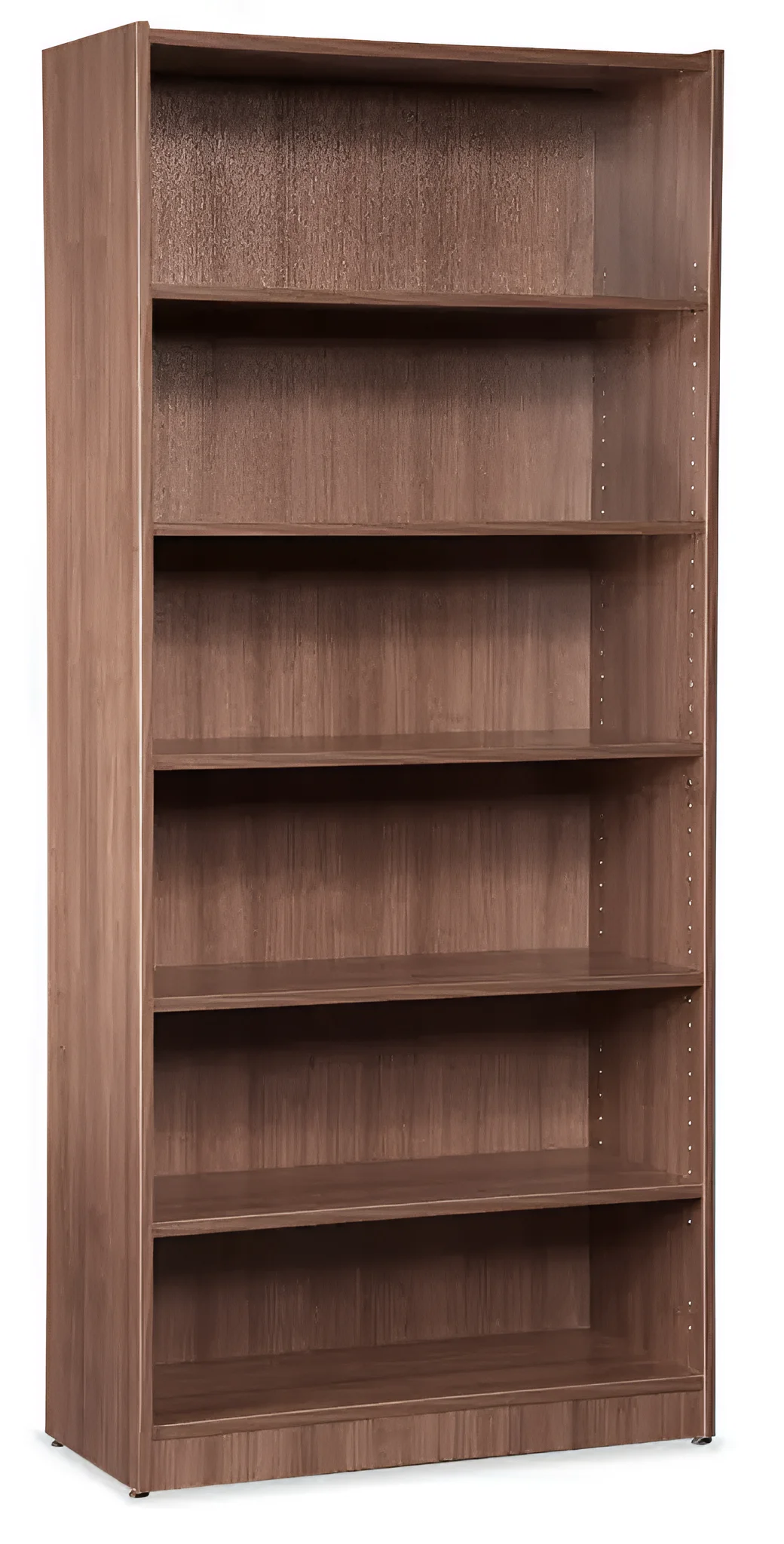
Open Storage Shelving 5-Shelf by PBD Furniture
View & OrderA closed cabinet is the right call any time the room's appearance matters as much as its function. Conference rooms, reception areas, executive offices, and shared team spaces all benefit from the clean look that closed storage provides. If a client, a senior colleague, or a job candidate is going to walk in and form an impression, a tidy room with closed storage looks more controlled and professional than a room where the bookshelves are loaded with whatever's been accumulating. Closed cabinets are also the smarter pick for supplies, archived records, and anything that simply doesn't need to be visible — there's no benefit to putting that material on display.
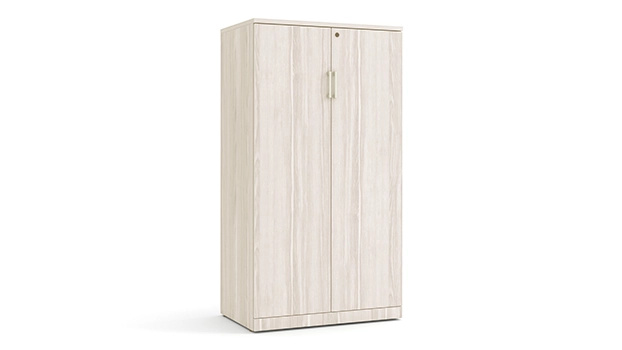
Storage Cabinet 65.5in H Laminate Wood Door by PBD Furniture
View & OrderThe most functional offices often combine both. A typical approach: open shelving for the materials you access daily — current project binders, a few reference volumes, frequently used supplies — and closed cabinets for archives, extra supplies, and anything that benefits from being out of sight. When you buy from the same furniture line, the bookcase and cabinet can share the same finish and proportions so the room looks cohesive rather than assembled from mismatched pieces. That coordination is usually worth the extra planning step.
Open shelving and closed cabinets typically share similar footprints in width, but differ in depth. Bookcases are usually shallower — 12 to 15 inches — while storage cabinets run 18 inches deep to accommodate wider contents. That extra depth on cabinets is worth knowing when you're measuring against walls, behind doors, or in alcoves where space is limited. Also, closed cabinets need clearance for their doors to swing open — a cabinet flush against an adjacent wall may be difficult to fully open. Check that clearance before you order, especially for taller or wider units.
Both types add visual presence to a wall. Open shelving reads as lighter; closed cabinets read as more substantial. If the room already has a lot of solid furniture, mixing in open shelving can balance the visual weight and keep the space from feeling enclosed.
Think about what you're actually storing and whether it needs to be visible. Frequently accessed materials in a well-organized office are great candidates for open shelving. Everything else, especially in client-facing or shared spaces, belongs behind closed doors. Both categories offer excellent products at FindOfficeFurniture.com with free shipping included. If you want help choosing sizes, matching finishes across a full storage plan, or figuring out the right mix for a specific room, give us a call — we're happy to help.
Shop Storage at FindOfficeFurniture.comThe big win with open shelving is immediate visibility and access. You can see everything at a glance — no opening doors, no searching drawers — and grab what you need without interrupting your workflow. That makes open shelving ideal for frequently referenced materials: binders you consult daily, project folders you're actively working on, and reference books you pull regularly. It also feels visually lighter in a room, which works well in smaller offices where a solid cabinet would add visual weight.
It can if you're not disciplined about what goes on it. Open shelving is honest storage — it shows exactly what's there, organized or not. In offices where materials are well-organized and containers are consistent (matching binder colors, uniform bins, labeled boxes), open shelving can look clean and professional. In offices where materials accumulate casually, open shelving amplifies the clutter rather than hiding it. Before choosing open shelving for a client-facing space, ask honestly whether the people who'll use it will keep it tidy.
A closed cabinet is the right call when visual tidiness matters, when the contents shouldn't be visible to visitors, or when you're storing a mix of items that don't look organized together. It's particularly strong in conference rooms, reception areas, private offices where clients visit, and any space that needs to project a polished, professional appearance. Closed storage lets you organize things at whatever pace works for you without that showing up in the room's impression.
Yes, and many well-designed offices do exactly that. Use open shelving for active, frequently accessed materials and closed cabinets for supplies, archived records, and anything that benefits from being out of sight. Matching the finish across both pieces keeps the room looking coordinated. Many furniture lines offer bookcases and storage cabinets in the same finish specifically to enable this kind of mix.
Yes, by definition — open shelving exposes its contents to ambient air. In an active office where things are accessed and moved regularly, that's rarely a practical problem. For items stored long-term or archival materials that sit untouched, a closed cabinet protects better. For everyday reference materials in a well-ventilated office, the dust difference is minor and easy to manage.