
- Menu
- Desks
- Seating
- Tables
- Customer Service
- 1.888.719.4960
Both chairs seat a visitor. But one creates an experience and the other manages traffic. Before you choose, here's exactly what separates them and where each one belongs.
Quick Verdict
Guest chairs are the practical choice for most offices — they fit in tighter spaces, hold up in high-turnover settings, and work equally well in reception areas, private offices, and conference room perimeters. Lounge chairs belong where atmosphere, comfort, and impression matter more than density — reception lounges in client-facing offices, executive suites, and waiting areas where visitors may spend meaningful time. When in doubt, spec guest chairs for efficiency and add lounge pieces where the room benefits from a focal point.
| Feature / Factor | Lounge Chair | Guest Chair |
|---|---|---|
| Typical Width | 28"–34" — broader seat, lower stance | 19"–22" — compact and upright |
| Approx. Weight | 45–95 lbs | 15–35 lbs |
| Best For | Reception lounges, executive offices, and waiting zones where comfort and atmosphere matter | Guest seating at desks, reception perimeter, and areas where efficiency and traffic flow matter |
| Main Advantage | Creates a relaxed, hospitality-oriented seating experience — makes visitors feel welcomed | Fits more seats into less space and supports cleaner traffic flow |
| Main Trade-Off | Uses significantly more floor area — less upright for short transactional visits | Delivers less lounge-level comfort for longer waits |
| Accessories | Pairs well with occasional tables and soft-seating groupings | Easy to deploy in rows, pairs, or desk-side settings |
| Rearranging | Heavy — placed once and rarely moved | Light and easy to reposition for different configurations |
| Visual Profile | Upscale and inviting | Clean and businesslike |
| Space Planning | Needs generous surrounding space — can overwhelm small rooms | Excellent in compact lobbies, small offices, and high-density seating areas |
| Long-Term Value | Excellent when experience and impression outrank density | Very strong for general visitor and side seating — broad application |
Lounge chairs and guest chairs occupy the same general category — non-task seating for visitors — but they're designed from very different starting points. A lounge chair (also called a club chair in commercial settings) is built around the idea of relaxed dwelling. The seat is lower to the ground, wider, and more deeply cushioned. The back angle is more reclined. Everything about the posture a lounge chair encourages is designed for someone who is settling in for a while — reading, waiting at length, or simply relaxing while the atmosphere of the room works on them. They're substantial pieces that anchor a space and signal investment.
A guest chair is built for upright, businesslike posture and efficient use of floor space. The seat height is higher, the width is compact enough to place two chairs side by side without crowding, and the overall silhouette is more neutral — appropriate for a private office, a reception desk front, or any setting where visitors need to sit comfortably but briefly. Guest chairs don't create atmosphere; they support efficiency without friction. That's exactly what they're supposed to do.
Lounge chairs belong in spaces where the quality of the waiting experience is part of what your office communicates to visitors. A well-furnished reception lounge with a pair of club chairs and a coordinating occasional table sends a message about the organization's attention to detail and respect for its clients' time. Executive offices, boardroom anterrooms, and client-facing waiting areas are all natural fits for lounge seating.
The practical constraint to manage is floor space. A lounge chair typically needs 36 to 42 inches of floor depth and comparable width — plus clearance on each side to feel comfortable. In a small reception area that needs to seat six people, you can't afford to give up that much floor space per seat. Plan the room first, confirm the square footage is genuinely available, and then consider whether lounge chairs are realistic for the space or better used as an accent grouping alongside a larger guest chair specification.
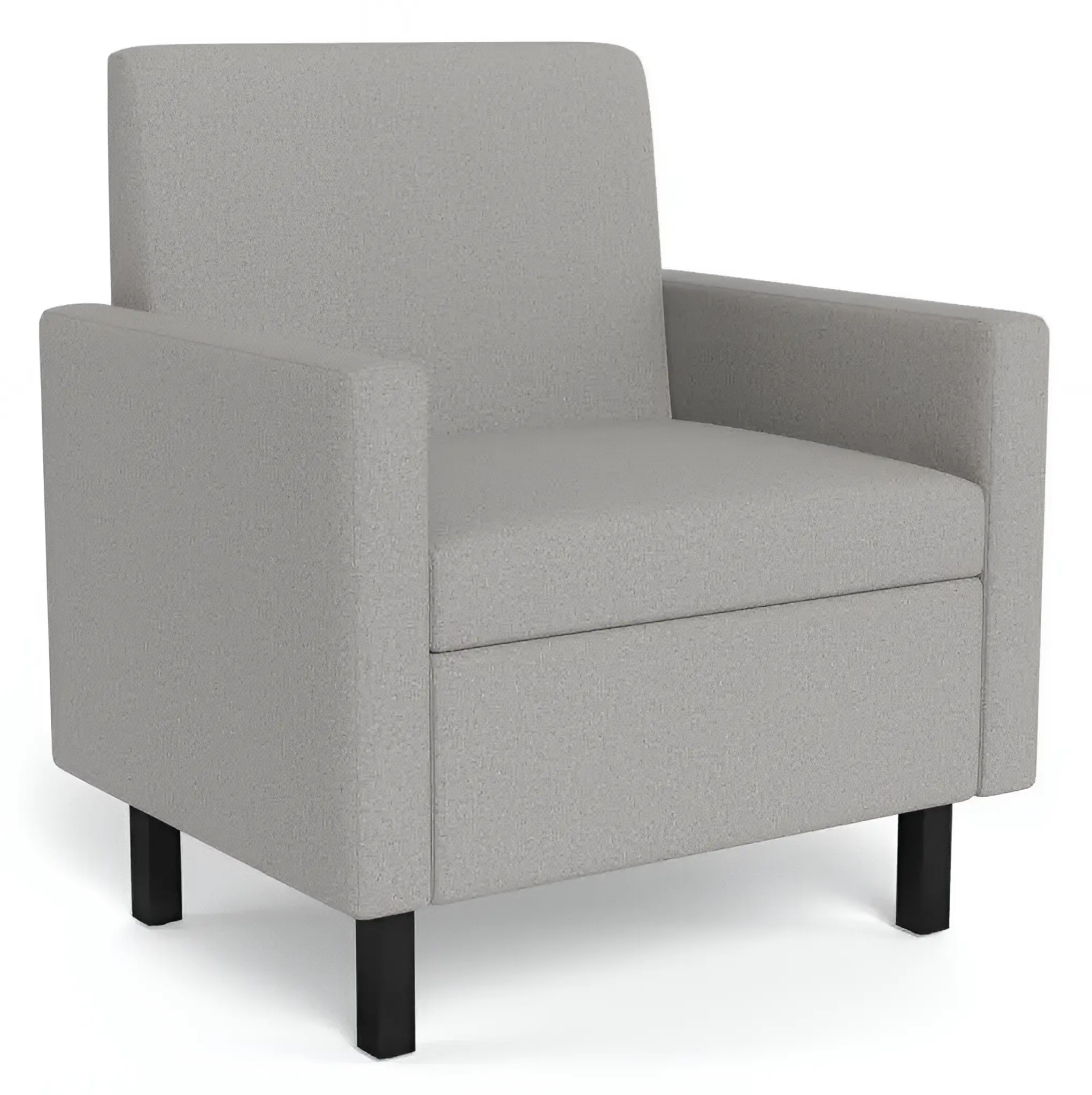
Lounge Chair Upholstered by Safco Products
View & OrderGuest chairs are the workhorse of office visitor seating. They belong in private offices (two chairs across from the desk), reception areas (grouped or lined along a wall), conference rooms (perimeter overflow seating), and anywhere you need to seat people efficiently without dedicating large amounts of floor space to each seat. Their lighter weight (typically 15 to 35 lbs) makes them easy to reposition for different configurations, and commercial-grade fabric or vinyl options hold up well in high-turnover settings.
Guest chairs also work well as the practical backbone of a reception seating plan that includes lounge chairs as a focal element. Put lounge chairs in the center grouping and guest chairs along the walls or behind a reception desk, and you get both the atmosphere of lounge seating and the capacity of a well-planned guest chair specification.
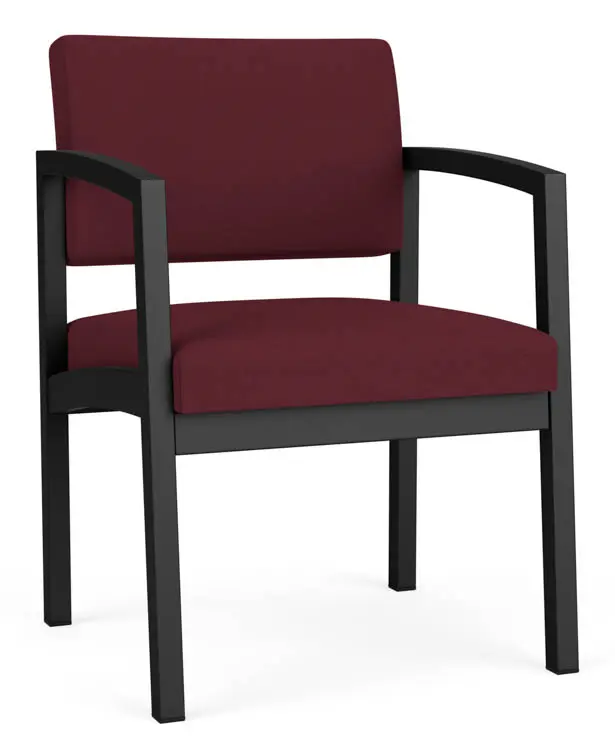
Guest Chair Fabric Seat and Back by La-Z-Boy
View & OrderLounge chairs run higher per unit than guest chairs — quality commercial lounge seating carries a meaningfully higher investment than guest chairs at the same quality tier. That said, the comparison isn't always apples-to-apples: a lounge chair does a different job than a guest chair, and the investment in a few well-chosen lounge pieces for a client-facing reception area can pay dividends in the impression your office makes on visitors every day.
Plan both categories together when designing a seating area. Don't buy lounge chairs and discover you've run out of room for the practical guest seating you actually need. Free shipping at FindOfficeFurniture.com means you're not adding freight calculations to an already complex layout decision.
The biggest mistake in reception and lobby seating plans is underestimating how much space lounge chairs consume. A single club chair with appropriate clearances around it occupies as much footprint as three to four guest chairs. Before ordering, sketch out your floor plan with the actual dimensions of the chairs you're considering. Mark out chair footprints, access paths, and clearances between pieces. Then stand back and consider whether the room feels open or crowded.
For private offices with across-the-desk visitor seating, two guest chairs side by side is almost always the right call — the proportions work, the depth doesn't eat the office, and the posture is right for business conversations. If you're designing a reception area or executive waiting zone and aren't sure how to balance lounge and guest seating, give us a call. We've helped design hundreds of these spaces and we're happy to talk through the layout before you order anything.
For most offices, guest chairs are the more versatile and practical specification — efficient, adaptable, and appropriate for almost every visitor seating scenario from private offices to reception areas. Lounge chairs earn their place in spaces where the quality of the waiting experience matters and where the floor plan genuinely supports their footprint. The strongest reception areas usually include both — lounge pieces as a focal seating grouping and guest chairs for practical capacity and flexibility. Browse all seating at FindOfficeFurniture.com or call us and we'll help you spec the right mix for your space.
Shop Seating at FindOfficeFurniture.comA lounge chair is designed for comfort over time — it has a broader, lower seat profile (typically 28–34 inches wide), plush cushioning, and an inviting posture that encourages relaxed, extended sitting. A guest chair is built for efficiency and density — it's narrower (usually 19–22 inches wide), more upright, and designed for side-by-side groupings in reception areas, waiting rooms, and across from desks. Lounge chairs create atmosphere. Guest chairs manage traffic and capacity.
Lounge chairs are substantially larger. Most commercial lounge or club chairs need at least 36 to 42 inches of floor depth from back to front, plus comfortable clearance on each side — plan for a 4 by 4 foot zone per chair minimum if you want the space to feel open. Guest chairs are far more compact. You can place two guest chairs side by side in the same floor area a lounge chair would occupy. If seating capacity in a limited space is a priority, guest chairs give you three to four times the density.
Yes — depending on the nature of the reception area and the clientele. A law firm, financial advisory, or executive suite reception where visitors wait 15 to 30 minutes or longer and client impression matters significantly is an excellent application for lounge seating. A high-volume reception area where people are processed quickly and seating density matters more than atmosphere is better served by guest chairs. Many reception areas blend both: lounge chairs as a focal point grouping and guest chairs along the perimeter for overflow capacity.
Guest chairs are arguably the ideal solution for across-the-desk visitor seating. They're designed for exactly this application — an upright posture appropriate for business conversations, proportional scale that doesn't overwhelm a private office, and a width that allows two chairs to sit side by side without crowding the desk. Lounge chairs are too wide and too low for across-the-desk seating — they create an awkward eye-level mismatch and take up significantly more office floor plan.
Both can perform well in commercial environments when specified correctly, but the maintenance profile differs. Guest chairs are lighter (typically 15–35 lbs), easier to rearrange, and come in commercial-grade upholstery options designed for high traffic. Lounge chairs are heavier (45–95 lbs), moved less often, and typically rely on softer upholstery that requires more attention in high-use settings. If the seating will be used and repositioned daily by many different people, guest chairs are the more practical long-term specification. If lounge chairs will be placed once and used by a consistent, controlled population, they hold up very well.