
- Menu
- Desks
- Seating
- Tables
- Customer Service
- 1.888.719.4960
Both live in storage most of the time and come out when you need extra seats. But they're not interchangeable — and choosing the wrong one means either a chair that feels cheap for repeat use or one that never stores as efficiently as you expected.
Quick Verdict
For commercial offices, training rooms, break rooms, and anywhere chairs will be used repeatedly and need to look presentable, the stacking chair is the smarter long-term investment. Folding chairs win when maximum storage efficiency and fast event-style deployment matter more than comfort or appearance. Match the chair to the actual use case and you won't regret either one.
| Feature / Factor | Stacking Chair | Folding Chair |
|---|---|---|
| Typical Seat Width | 18"–20" — upright, multi-purpose proportions | 17"–19" — folds nearly flat for storage |
| Approx. Weight | 12–22 lbs per chair | 8–16 lbs per chair |
| Best For | Training rooms, waiting areas, break rooms, flexible event spaces | Overflow seating, temporary events, and highly mobile setups |
| Main Advantage | Stores quickly in vertical stacks — more substantial for daily repeat use | Stores flatter and moves faster than most stacking chairs |
| Main Trade-Off | Does not collapse flat — storage footprint differs from folding chairs | Usually less comfortable and less permanent-feeling over long sessions |
| Accessories | Often available with transport carts, glides, and ganging options | Works with transport carts for event-style deployment |
| Setup / Takedown | Minimal — unbox and arrange | Fastest setup and breakdown of the two options |
| Visual Profile | Neater and more permanent-looking | Functional, temporary |
| Maintenance | Easy to clean and maintain in large quantities | Simple — though hinges and frame finish matter over time |
| Long-Term Value | Strong for commercial environments with repeat-use needs | Excellent for occasional seating — not always for daily institutional use |
The core difference isn't just how they store — it's what they're designed to communicate and how they hold up under regular use. A stacking chair maintains a fixed shape. It looks like a real chair because it is one — just one that happens to nest vertically with others when the room needs to be cleared. Commercial stacking chairs often have padded seats, contoured backs, and finished frames that fit naturally in a training room, conference area, or lobby without looking temporary. They're built for environments where chairs come in and out of use regularly but still need to look presentable.
A folding chair collapses at the pivot point between seat and back. That mechanical fold is everything — it's how the chair gets thin enough to hang on a wall rack or lean a dozen deep against a closet shelf. The trade-off is that folding chairs feel inherently more provisional. The pivot creates flex, the profile is usually slimmer, and most models aren't padded the way a quality stacking chair would be. That's fine when you need thirty seats for a two-hour event and want them gone by 5 PM. It's less fine when people are sitting in those chairs all day for a training session.
Choose a stacking chair when the room will use the chairs regularly and you want the seating to feel intentional rather than improvised. Training rooms, seminar spaces, break rooms, and waiting areas all fall into this category. A decent stacking chair — particularly a mesh or padded poly model on a steel frame — holds up well through repeated daily use, cleans easily, and stacks efficiently with a cart. If your chairs will be out as often as they're stored, the stacking chair delivers more value per chair over time.
Stacking chairs also look better in rooms where the seating has to coexist with permanent furniture. A pair of quality stacking chairs at a training table or conference perimeter reads as a design choice. A row of folding chairs in the same spot signals "we ran out of real chairs."
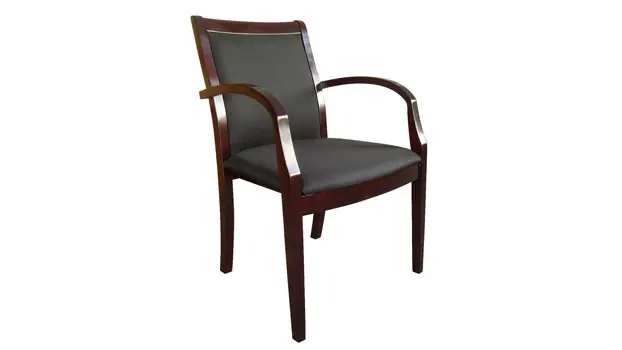
Stacking Chair Fabric Seat by Boss Office Products
View & OrderFolding chairs make the most sense when maximum storage efficiency and the ability to deploy quickly for events trump everything else. If your facility sets up and breaks down seating for conferences, receptions, or rotating-use events where the chair count varies dramatically from day to day, folding chairs are faster to move, easier to load onto a rack, and simpler to manage at scale. Their lighter individual weight (typically 8 to 16 lbs) also makes it easier for one person to handle a dozen chairs without needing a cart.
Just be realistic about the comfort trade-off. If people are sitting in folding chairs for more than an hour or two at a stretch, they'll feel the difference — especially if the model doesn't have any seat padding. For short-duration seating at events, that's an acceptable trade. For all-day use in a training environment, it isn't.
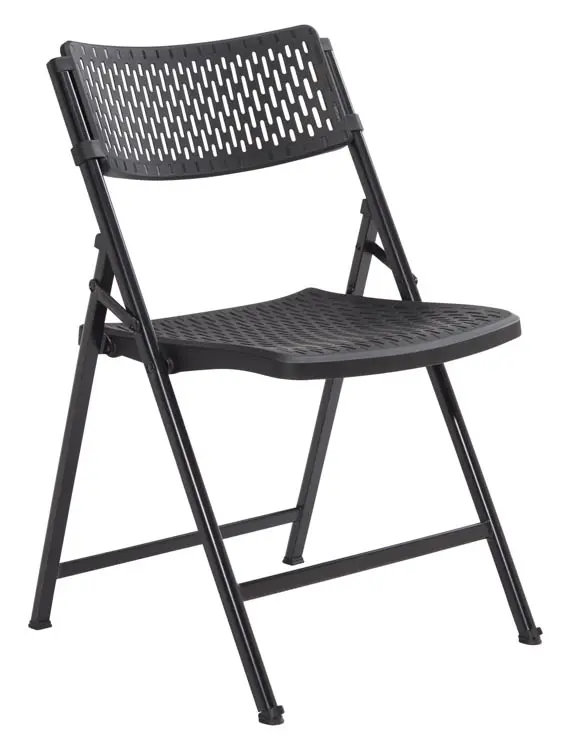
Folding Chair Metal Frame by National Public Seating
View & OrderFolding chairs cost less per chair, which makes the opening budget look attractive. But if the chairs will be used in sessions where comfort actually matters and people are uncomfortable after the first hour, you're creating a problem for every training day, every meeting, and every event. A stacking chair that costs a bit more per unit but gets used confidently for years without complaint is a better investment than a cheaper folding chair that everyone dreads sitting in.
Factor in the full picture: chair durability, how often they'll be moved, whether you need carts, and what the room needs to look like when the chairs are out. Free shipping at FindOfficeFurniture.com means you're not adding freight on top of unit price — the listed price is what you pay.
Before you order, think about where these chairs will live when they're not in use. Stacking chairs need vertical clearance — a stack of eight to ten chairs can reach five feet or more, and you need a stable flat surface or storage cart to manage large quantities safely. Folding chairs need horizontal space — a wall rack or flat storage area — but can be incredibly dense when stored correctly.
Also think about how often the chairs move. If you're setting up seating in a multipurpose room multiple times a week, having a dedicated cart for your stacking chairs will save significant time and reduce wear on both the chairs and the floor. Our team is happy to help you figure out the right quantity and accessories for your space — call us anytime.
For most commercial office environments — training rooms, conference overflow, break rooms, and waiting areas — the stacking chair is the more professional and practical choice. It stores efficiently, holds up to repeat use, and doesn't signal "temporary" every time the room fills up. If you're running an events-oriented space where maximum setup speed and flat storage are the priority, folding chairs earn their keep. Browse all seating options at FindOfficeFurniture.com or call us and we'll help you find the right chair and the right quantity for your space.
Shop Seating at FindOfficeFurniture.comA stacking chair keeps its full shape at all times — you move it by carrying or rolling it, and store multiple chairs vertically in a stack. A folding chair collapses flat by folding at the seat and back joint, which lets it store in a much thinner profile. Stacking chairs tend to feel more substantial and comfortable for extended sitting. Folding chairs prioritize maximum storage efficiency and fastest possible setup and breakdown, though they can feel less sturdy during longer events.
Folding chairs win for floor footprint when stored flat — a row of folded chairs leaning against a wall or on a rack takes up very little depth. Stacking chairs go vertical but don't compress, so you need enough overhead clearance to build a tall stack. If you have high storage shelves or a dedicated rack system, stacking chairs can store quite efficiently. If your storage area is low-ceilinged or chairs need to hang on a wall rack, folding chairs have the advantage.
Quality stacking chairs — particularly those with padded seats, contoured backs, and a solid four-leg frame — are designed for exactly this kind of use. Training rooms, seminar spaces, and break rooms routinely depend on stacking chairs for sessions that run several hours. Folding chairs are better suited to shorter events where people aren't seated continuously. If your use case involves full-day training or workshops, invest in a quality stacking chair rather than repurposing folding chairs.
It depends on the chair's materials. Metal-frame stacking chairs with hard seats can work in covered outdoor settings, but upholstered stacking chairs should generally stay inside. Folding chairs — particularly resin or blow-mold models — are a better fit for outdoor events, catering, and venues where weather and rough handling are factors. For a commercial office environment, stacking chairs are almost always the better answer. For a church, event hall, or multi-use venue, folding chairs often make more sense.
A chair cart isn't required, but it makes a significant difference if you're moving more than eight to ten chairs at once. Most commercial stacking chair lines offer compatible transport carts that let a single person wheel a full stack of 20 or more chairs across a room. Without a cart, stacking chairs have to be carried a few at a time. Folding chairs are lighter individually and easier to carry by hand in smaller quantities, though a folding-chair cart is also available for larger setups.